Most babies feed every 2 to 3 hours as newborns, move to milk feeds every 3 to 4 hours by 6 months as solids begin, and settle into 3 meals plus 3 to 4 milk feeds by 9 to 12 months. Your baby’s hunger and fullness cues matter more than any clock or chart.
Navigating your baby’s nutrition in the first year can feel like solving a moving puzzle. It’s completely normal to wonder whether your little one is eating enough or whether you’re doing things “right.” This guide walks you through every stage from birth to 12 months, using responsive feeding principles to help you feel confident.
How much and how often should a newborn or 3-month-old eat?
Newborns need frequent feeds because their tiny tummies empty quickly. In the early months, your baby’s world revolves around eating and sleeping.
Newborns (birth to 2 months): Breastfed babies typically feed every 2 to 3 hours, which adds up to 8 to 12 feeds in 24 hours. Formula-fed newborns generally feed about 6 to 10 times a day. In the first few days, formula-fed babies may start with 1 to 2 ounces per feed.
Ounce questions are common, and your baby’s appetite is the best guide. Parents often worry about portion sizes, and the answer depends on your baby’s individual appetite and growth.
- If you’re wondering “is 4oz too much for a newborn” or “is 4oz too much for a 1 month old,” know that many newborns start smaller, but some take 4 ounces at a feeding even early on.
- If your baby drinks 4 ounces and stays content, without severe spitting up is one of the noisy sleep sounds parents worry about or discomfort, that can be entirely normal. The same goes if you’re thinking, “my 2 week old is drinking 4 ounces.”
- For how many ounces of formula for a 7 week old or how many ounces to feed a 2 month old, a general guideline is around 3 to 4 ounces per feed, totaling 24 to 30 ounces over 24 hours.
Always follow your baby’s hunger cues rather than a strict clock.
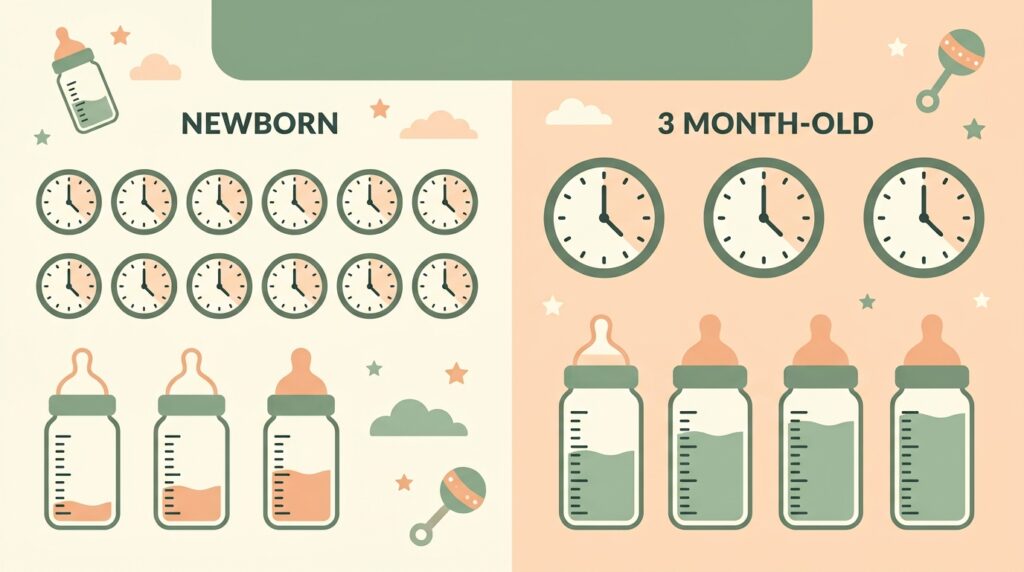
At 3 months, your baby can take slightly larger volumes, though many still feed every 3 hours or so. Their stomach has grown, so a 3 month baby feeding schedule looks a little more spaced out than in the newborn weeks.
If you’re asking how many oz a 3 month old needs, remember that volumes grow gradually and cues still lead. A flexible formula feeding schedule for a 3 month old should prioritize responsive feeding over forced bottle completion. The same applies to a 3 month breastfeeding schedule: let your baby’s cues set the pace.
If your 3 month old won’t eat more than 2 oz, try not to panic. Some babies are natural “grazers” who prefer smaller, more frequent meals to large bottles.
What does a feeding schedule look like for a 4- to 6-month-old?
Between 4 and 6 months, feeds become more efficient and waking windows lengthen as feeds consolidate — see our wake windows guide. Here is what to expect month by month.
At 4 months, you’ll likely see slightly longer stretches between feeds. A typical 4-month-old sleep and feeding schedule (or 4 month old sleep and feeding schedules) can still be interrupted by growth spurts, which may cause cluster feeding or more night wakings often arrive together during a sleep regression for a while.
At 5 months, babies generally take around 4 to 6 ounces (or more) per feed. That’s the typical range for a bottle feeding schedule for a 5 month old. If you’re nursing and asking how much should a 5 month old eat breast milk (or how much should 5 month old eat breast milk), the answer comes down to trusting your baby. Nursing sessions get quicker as your baby masters efficient milk transfer.
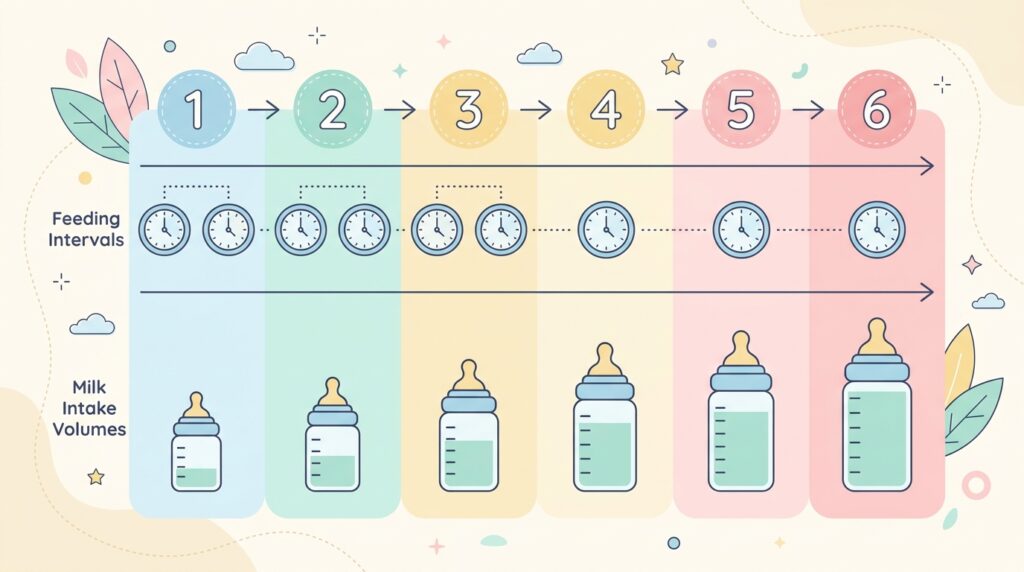
At 6 months, milk feeds usually happen every 3 to 4 hours alongside the first complementary foods. That’s the pattern in a standard feeding schedule for a 6 month old or 6 month old bottle schedule. If you’re asking how many oz does a 6 month old drink, most babies this age take around 6 to 8 ounces per bottle, totaling roughly 24 to 32 ounces of milk daily. This fits into a balanced 6 month-old sleep and feeding schedule.
When is my baby ready for solid foods, and how do I start?
Health guidelines recommend waiting until about 6 months to start solids. According to the CDC and pediatric experts, solid foods should not be introduced before 4 months. Parents are often eager to look into a 4 month old solid food schedule, but readiness matters more than a date on the calendar.
Before you begin a starting solids feeding schedule or a 6 month old solid food schedule, look for these readiness signs:
- Your baby can sit up well with support and keep their head steady and upright.
- They have lost the tongue-thrust reflex, meaning they swallow food rather than immediately pushing it back out.
- They can pick up objects and bring them to their mouth.
- They show active interest in your food by watching you eat, opening their mouth, or leaning forward.
When you do start, keep milk as the primary foundation. Offer tiny amounts, just 1 to 2 tablespoons of single-ingredient purees or soft finger foods once a day, and let your baby’s appetite guide the way.

What should a feeding and sleep routine look like from 7 to 12 months?
After 6 months, food becomes an adventure, and your baby gradually moves toward a predictable daily rhythm.
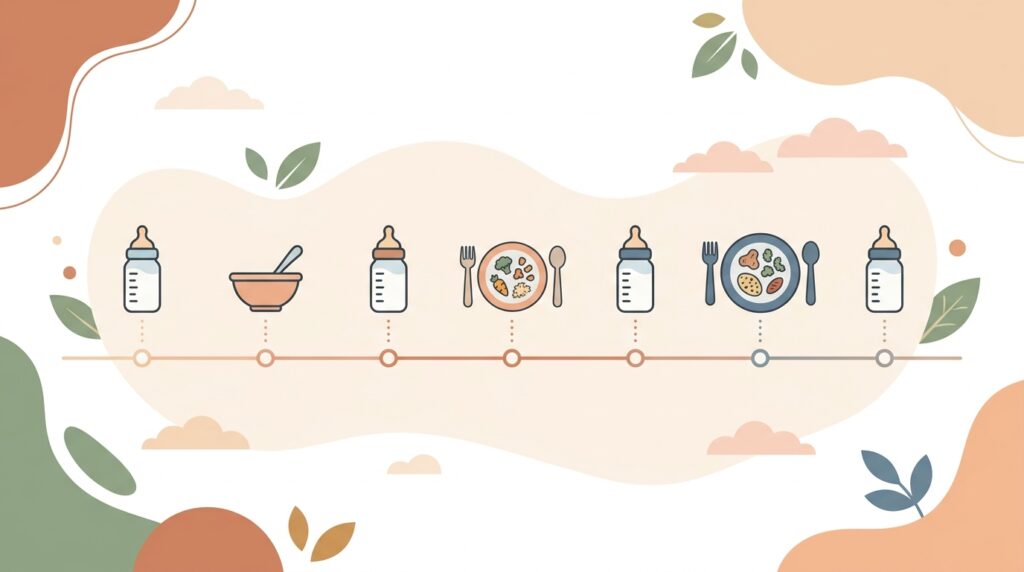
At 7 to 8 months, expect 3 solid-food meals plus 4 milk feeds. A sample feeding schedule for a 7 month old or an 8-month-old sleep and feeding schedule typically features breakfast, lunch, and dinner or tea, alongside 4 milk feeds of breast milk or formula. Snacks are generally unnecessary at this stage, because milk and small meal portions provide ample energy.
At 9 months, milk is offered about 3 to 4 times a day alongside 3 solid meals. Whether you’re reviewing a breastfeeding schedule for a 9 month old, a 9 month old bottle schedule, a 9 month old nursing schedule, or a solid starts 9 month schedule, you’ll notice your baby becoming more adept at finger foods and self-feeding. Milk remains a vital source of nutrition.
From 10 to 12 months, a routine of 3 structured meals a day is the anchor. A solid 10 month old feeding and sleep schedule is built around those meals.
By 11 months, most babies take about 3 milk feeds a day (roughly 400 ml, or equivalent nursing sessions). That answers common questions such as how many bottles should an 11 month old have (or how many bottles should a 11 month old have), how much milk should an 11 month old have, and what a nursing schedule for an 11 month old looks like.
As you move into a 12 month-old feeding schedule milk plan, whole cow’s milk can be introduced as a drink around 1 year old. Until then, breast milk or formula remains central, unless your pediatrician advises otherwise.
How can I tell if my baby is eating enough?
The best measures of your baby’s well-being are overall growth, contentment, and diaper output, not exact numbers.
A feeding and diaper chart can give you real peace of mind. Keep one mentally or on paper. After the first week of life, a well-fed baby should consistently produce at least 6 wet diapers every 24 hours, along with regular dirty diapers and steady weight gain along their own growth curve.
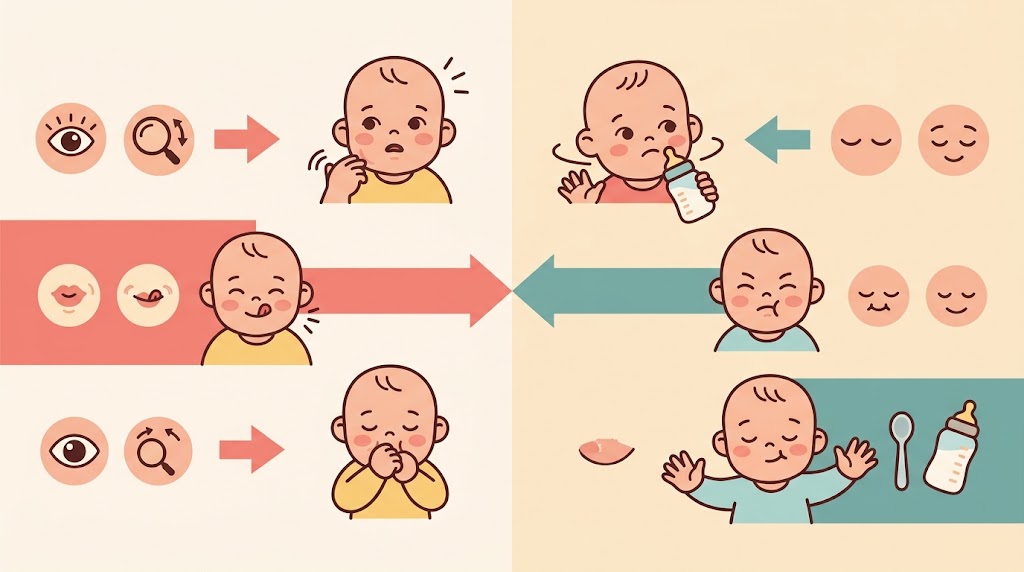
Responsive feeding means tuning into your baby rather than a clock. Watch for these cues:
- Early hunger cues: rooting, smacking lips, bringing hands to the mouth, and stirring. Crying is a late sign of hunger.
- Fullness cues: turning the head away, closing the mouth, slowing down the pace of feeding, or pushing the bottle or breast away.
Avoid forcing your baby to finish a bottle if they show signs of being full. Respecting their internal fullness cues helps prevent overfeeding, excessive spitting up, and tummy discomfort.
Which foods, drinks, and hazards should I avoid in the first year?
A few items pose safety or health risks during an infant’s first year, even though exploring new foods is exciting:
- Honey: Never give honey to a baby under 12 months old, due to the risk of infant botulism.
- Added salt and sugar: Avoid adding salt, stock cubes, or sugar to baby food. Tiny kidneys cannot process high sodium levels, and early exposure to added sugars sets up unhealthy taste preferences.
- Water: Water is unnecessary before 6 months, since breast milk or formula provides all the hydration your baby needs. After 6 months, small amounts (4 to 6 ounces per day) in an open or sippy cup are fine alongside milk feeds.
- Cow’s milk: Do not use cow’s milk or milk alternatives as a primary drink before 12 months.
- Choking hazards: Avoid whole nuts, hard raw vegetables, popcorn, and small round foods like whole grapes or cherry tomatoes. Always cut grapes lengthwise and quarter cherry tomatoes.
When should I contact a pediatrician about feeding?
Contact your child’s pediatrician or a lactation consultant if something feels off or feeding struggles persist. Trust your parental instinct.
Seek medical advice promptly for any dehydration warning signs:
- No wet diapers for 8 hours or more
- Dark-colored urine
- A very dry mouth and lips
- Crying with no tears
Also consult your doctor if your baby has unexplained weight loss, poor weight gain, persistent vomiting or reflux, severe feeding refusal, or signs of a suspected food allergy.
For more feeding guides, browse our feeding and nutrition articles here.
Quick Summary
- Birth to 6 months: Feed on demand. Babies need exclusively breast milk or infant formula, feeding every 2 to 3 hours as newborns and gradually spacing out feeds as they grow.
- Starting solids (around 6 months): Introduce iron-rich complementary foods when your baby shows readiness signs (sitting upright, steady head control, and interest in food), while keeping milk as the primary source of nutrition.
- 7 to 12 months: Progress smoothly from 1 to 2 spoonfuls to 3 solid meals a day alongside continued milk feeds, gradually moving toward family table textures by 12 months.
- Safety first: Practice responsive feeding, watch diaper output to track hydration, completely avoid honey and added salt or sugar in the first year, and consult your pediatrician for personalized concerns.