
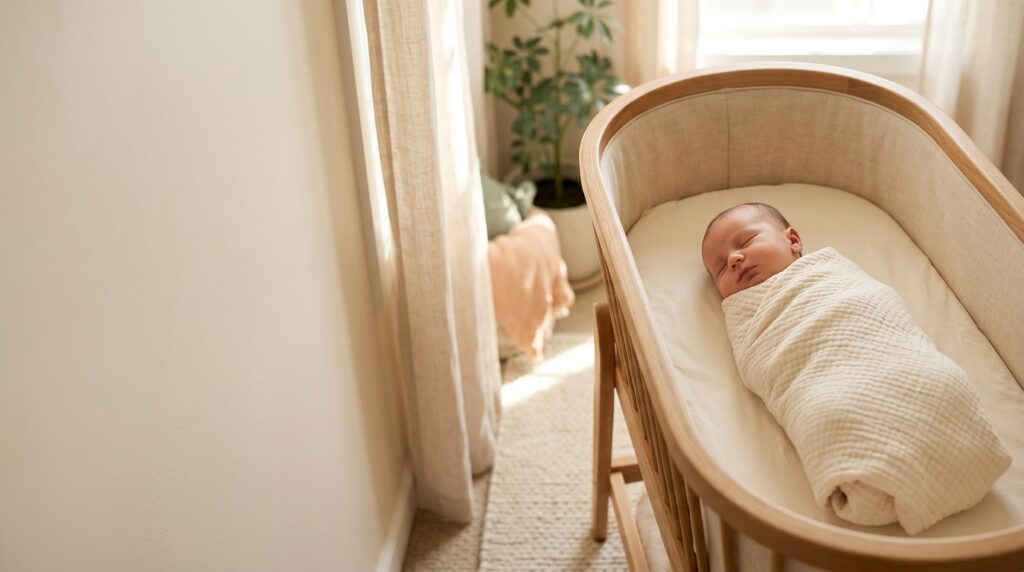
Yes, noisy sleep is normal for newborns. Grunts, snorts, gasps, and whimpers are, in most cases, a harmless part of your baby’s development. The sounds coming from the bassinet can still keep an anxious parent awake all night, so take a deep breath. Below, you’ll find what the sounds mean, what you can do about them, and when you actually need to call the doctor.
Why Is My Newborn So Noisy When They Sleep?
Newborns are noisy sleepers for several physiological reasons, and parent anxiety about unfamiliar sounds is incredibly common, so you aren’t alone.
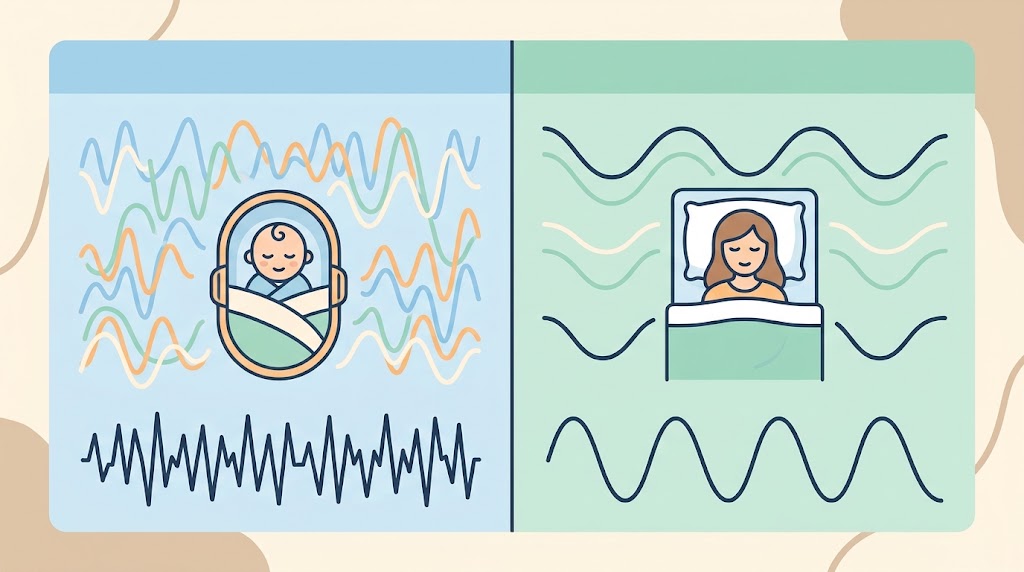
- Immature breathing and nervous systems: Your baby’s brain-lung coordination is still developing. This leads to periodic breathing, where babies take rapid or shallow breaths, pause briefly, and then take a deep breath.
- Narrow airways and nose breathing: Newborns are obligate nose breathers, meaning they almost exclusively breathe through very small, narrow nasal passages. Even a tiny bit of dry air or normal mucus buildup can create loud whistling or rattling sounds.
- Sleep-cycle transitions: Newborn sleep stages are different from adult sleep. Babies spend a massive amount of their time in REM sleep (often called “active sleep”), when they twitch, flutter their eyes, breathe irregularly, and make a lot of noise. They also cycle between light sleep and deep (quiet) sleep very rapidly, about every 45 to 50 minutes.
What Do All These Baby Sleep Noises Actually Mean?
Most newborn sleep noises have a simple, harmless explanation. Decoding your baby’s nighttime soundtrack can feel like learning a new language, so here is a breakdown of the common ones.
- Grunting and groaning: Hearing a newborn grunting in sleep is one of the most common things parents report, and it is frequently related to digestion. Newborns are learning how to pass gas and poop, and they often lack the pelvic-floor coordination to do it seamlessly. This is sometimes called “grunting baby syndrome.” Grunting can also just be a normal sound made during REM sleep.
- Snoring and snorting: Mild newborn snoring or snorting is usually just air moving through tiny nasal passages that may have a little mucus, breast milk, or formula in them.
- Gasping and panting: It is terrifying to hear, but a baby making gasping sounds but breathing fine afterward is generally experiencing normal periodic breathing. As their brain and lungs learn to sync up, a short pause in breathing (less than 10 seconds) followed by a rapid gasp or panting is a normal developmental milestone.
- Hiccups: Newborn hiccups are incredibly common (you may have even felt them in the womb!). They are caused by stimulation of the phrenic nerve and an immature diaphragm. They can happen during sleep, especially after a feeding, and are entirely harmless.
- Squealing, cooing, moaning, and whimpering: These are standard sleep-cycle transition noises. As your baby moves from deep to light sleep, their vocal cords get a workout.
- Rooting, lip-smacking, and suckling: These are natural reflexes. Sometimes they are hunger cues signaling your baby needs to eat soon, but often babies simply make suckling sounds to self-soothe while remaining fully asleep.
Why Do Babies Cry in Their Sleep? (And Can Newborns Have Bad Dreams?)
Brief crying in sleep doesn’t necessarily mean your baby is awake or in pain, even though it can be heartbreaking to hear.
Why do babies cry in their sleep? Most of the time, a baby crying in sleep is just reacting physically as they transition between sleep cycles. Because they spend so much time in light, active sleep, they frequently stir, let out a cry, and settle right back down.
Can newborns have bad dreams? The short answer is no. Babies do experience REM sleep (the dream stage), but their brains have not yet developed the cognitive ability, language, or life experiences to form narrative bad dreams or nightmares. If they cry out, it is much more likely a physical reflex, a brief moment of gas, or a sleep transition than a scary dream.
Are Feeding and Digestion Causing Those Gurgles and Grunts?
Often, yes. Because your baby’s digestive system is working around the clock, feeding-related noises are very common.
- Reflux and swallowing: You might hear gurgling or wet swallowing sounds after a feeding. This is often just a bit of milk or formula remaining in the back of the throat, or mild reflux as they digest.
- Gas and rumbling: A baby’s digestive tract is brand new. Passing gas, digesting food, and normal tummy rumbling can result in a symphony of groans, grunts, and squeaks.
- Burping: Sometimes a trapped air bubble works its way up while they sleep, resulting in a spontaneous sleep-burp.
Is It Just a Stuffy Nose, or Something Else?
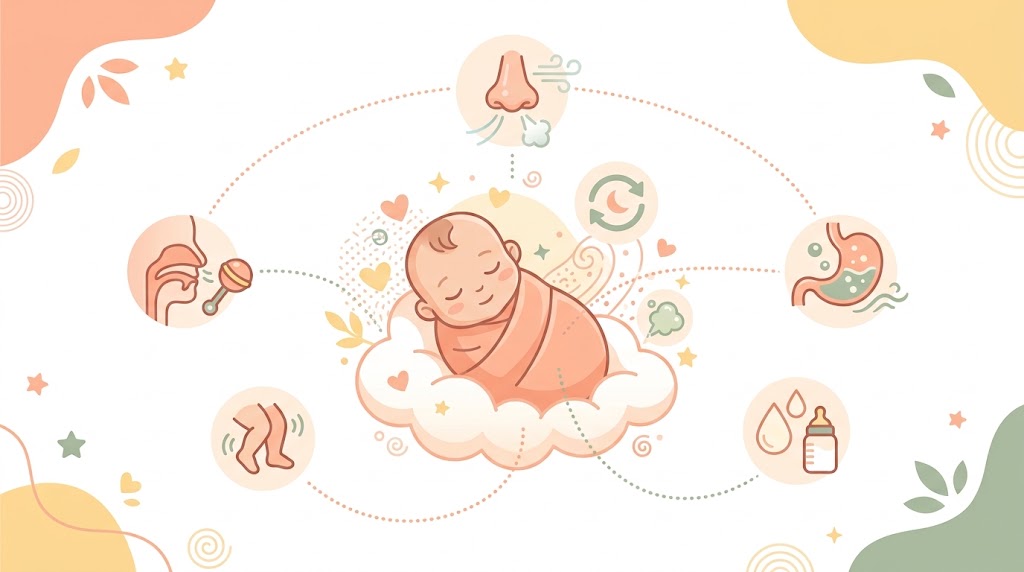
Nasal congestion is a frequent culprit for noisy sleep, because babies breathe through their noses.
- Normal congestion: Saliva pooling, minor mucus, or a bit of spit-up can cause whistling, rattling, or mild wheezing. Sneezing is also a normal newborn reflex used to clear these tiny passages, not necessarily a sign of a cold.
- Mouth breathing: Because babies are wired to breathe through their noses, a newborn sleeps with mouth open only when they absolutely have to. If your baby is consistently sleeping with an open mouth, it usually indicates their nasal passages are fully blocked by a cold or severe congestion. If it persists when they aren’t sick, mention it to your pediatrician to rule out structural causes such as enlarged adenoids.
- Airway development: Occasionally, noisy breathing can be a sign of conditions like laryngomalacia or bronchomalacia, where the cartilage in the airway is a bit floppy. Signs include a high-pitched squeak or stridor when breathing in, or noisy breathing that gets worse when lying flat. This usually resolves on its own but should be diagnosed by a doctor.
What Should I Do When I Hear My Baby Making Sleep Noises?
Start by waiting. When your baby starts sounding like a tiny farm animal, your first instinct is probably to scoop them up, but these practical steps usually work better.
- The “pause”: Wait and observe for 1 to 2 minutes before intervening, and check whether your baby is actually awake. Often, they will grunt, cry out, or thrash around, and then fall right back into deep sleep. Picking them up immediately can disrupt their natural sleep learning and prevent them from learning to self-soothe.
- Clear the airway: If the noise is caused by dry air or mild congestion, run a cool-mist humidifier in the room. You can also use a few drops of infant nasal saline and gentle nasal suction (like a bulb syringe or FridaBaby Snotsucker) before bedtime to clear mucus.
- Adjust feeding and comfort: If grunting and gurgling are from reflux, try slowing feedings, checking your bottle nipple flow, keeping baby upright for 15 to 20 minutes after eating, and ensuring a good burp. A gentle back rub or diaper change can also help if they are waking from discomfort.
- Practice safe sleep: Always place your baby on their back on a firm, flat sleep surface without loose blankets, pillows, or toys. Safe back sleeping prevents airway obstruction. Keep the sleep environment completely smoke-free, as secondhand smoke severely irritates airways and increases snoring.

For more on helping your baby (and you) sleep well, browse our sleep guides here.
When Should I Worry About My Baby’s Breathing Sounds?
Most sounds are harmless and become quieter as your baby reaches 3 to 4 months of age, but a few require medical attention.
Call your pediatrician if you notice:
- Loud, persistent snoring that happens 3 or more nights a week, or snoring that seems to be getting worse.
- Grunting at the end of every single breath (not just occasional digestive grunting).
- Persistent wheezing or a high-pitched stridor sound.
- Poor feeding, failure to gain weight, or frequent forceful vomiting alongside noisy breathing.
- Tip: If you are unsure, record your baby’s sleep noises on your phone to play for the pediatrician.
Seek EMERGENCY medical help (call 911 or go to the ER) if your baby has:
- Breathing pauses that last longer than 10 seconds.
- Skin, lips, or face turning blue, dusky, or gray.
- Labored breathing, including nostrils flaring with each breath or chest heaving (visible sucking-in of the skin around the neck or ribs, known as retractions).
- Breathing that is consistently faster than 60 breaths per minute.
- Extreme lethargy, unresponsiveness, or a fever in any baby under 28 days old.
Quick Summary
Loud sleeping is one of the surprises of the newborn days, and here is the bottom line:
- Most sounds are normal: Grunting, occasional snoring, brief gasps, hiccups, and sleep-crying are standard developmental milestones as your baby’s body learns to breathe, digest, and sleep.
- Wait before you wake: Give your baby a minute or two to settle before picking them up. They are likely still asleep!
- Know the red flags: Watch for prolonged pauses in breathing (over 10 seconds), blue lips, chest retractions, or grunting with every single breath.
- It gets better: As their airways grow and their sleep cycles mature, most babies become much quieter sleepers by 3 to 6 months of age.