

Medically, the newborn stage lasts the first 28 days of life. In everyday parenting, most babies are considered newborns for about 8 to 12 weeks (2 to 3 months), and a baby is no longer a newborn once they move past the 2- to 3-month mark.
If you are bleary-eyed at 3:00 AM wondering about every grunt, cry, and feeding, you are not alone. Knowing what is normal can help you move through these early weeks with a bit more confidence. Here is what to expect, how to get through it, and how to tell when this intense phase is ending.
What Exactly Is the Newborn Stage (And How Long Does It Last)?
The answer to “how long is the newborn stage?” depends on who you ask, because there are two common definitions.
The medical definition: According to the World Health Organization and the American Academy of Pediatrics, the neonatal (newborn) period is the first 28 days (4 weeks) of life. Pediatricians use this cutoff for clinical care and risk assessment.
The practical parenting definition: Most parenting resources and doctors loosely consider babies newborns for the first 8 to 12 weeks (2 to 3 months). That is because hallmark newborn traits persist well past the 28-day mark: frequent feeding on demand, round-the-clock sleep, limited alertness, and reflex-driven movements.
Many experts call this first three-month period the “fourth trimester.” Your baby is adjusting to life outside the womb and needs an environment that mimics it: warmth, movement, and constant closeness.

Your Baby’s Body and Brain: What to Expect in the Early Weeks
Newborns arrive with physical characteristics and reflexes designed for survival.
Primitive reflexes: You will notice reflexes rather than intentional movements. The rooting reflex helps your baby find a nipple, the grasping reflex makes them hold your finger, and the startle (Moro) reflex makes them throw their arms out when they feel unsupported or hear a loud noise.
Vision and senses: A newborn’s visual range is limited to about 8 to 12 inches, just enough to see your face while feeding. Their hearing, however, is well underway, and they will quickly learn to recognize familiar voices and respond to sounds.
Temperature regulation: Newborns are highly sensitive to temperature changes because they lack body fat. They need appropriate clothing and warmth, and skin-to-skin contact is a wonderful way to help them regulate their temperature while you bond.
You can also start floor play and tummy time early to encourage motor development. It helps your baby practice lifting their head and builds the neck and shoulder strength they will need later for rolling and crawling.

Feeding, Diapering, and Growth: The Daily Routine
Feeding and diaper changes will dominate your days, because newborns have tiny stomachs and need to eat around the clock.
Feeding patterns: Always feed a newborn on demand rather than on a strict schedule. Breastfed babies usually feed 8 to 12 times in a 24-hour period, while formula-fed babies feed about every 2 to 3 hours (at least 8 times a day). In the first few days, breastfed babies receive colostrum, a thick, nutrient-dense first milk, before the milk transition occurs.
Diapering: Diapers are the best indicator that your baby is getting enough milk. Expect about 2 to 3 wet diapers a day in days 1 to 3. By day 4 or 5, you should see at least 5 to 6 wet diapers per day.
Umbilical cord care: Keep the cord stump clean and dry. Fold the top of the diaper down to avoid rubbing the area until the stump falls off and heals completely.
Growth spurts: Expect rapid weight gain, and most babies double their birth weight in the early months. During typical growth spurts, your baby may be fussy and want to feed constantly. This is normal.
Navigating Newborn Sleep (and Safe Sleep Practices)
Newborn sleep is famously erratic. In the first few weeks, sleep comes in short, fragmented stretches day and night, and day/night confusion is common because babies do not yet have a circadian rhythm. Keep wake windows short to prevent overtiredness.
For more on helping your baby (and you) rest, find our sleep guides here.
The ABCs of Safe Sleep
Safe sleep practices are critical. The American Academy of Pediatrics sets out these rules:
- Alone: The baby sleeps in their own sleep space, not in an adult bed or on a couch.
- Back: Always place the baby on their back for every nap and nighttime sleep.
- Crib: Use a firm, flat surface with a fitted sheet and absolutely nothing else in the space: no blankets, pillows, bumpers, or stuffed toys.

Room-sharing is recommended for at least the first 6 months, but bed-sharing is not.
Swaddling is a great way to keep your baby warm without loose blankets. Stop swaddling as soon as your baby shows signs of rolling, and transition to a sleeping bag or wearable blanket at that point.
Keeping Your Newborn Safe, Healthy, and Comforted
Understanding basic newborn care will give you peace of mind when things get stressful.
Bathing: Stick to sponge baths until the umbilical cord separates and heals. After that, bathing 2 to 3 times a week is plenty to protect their sensitive skin.
Soothing: When your baby cries, go down the checklist: Are they hungry? Wet? Tired? Gassy? If all needs are met, soothe a fussy newborn through holding, shushing, gentle swaying, or skin-to-skin contact. Never shake a baby.
Health warning signs: Newborns have immature immune systems, which leaves them highly vulnerable to infection. Avoid large crowds and sick contacts, especially during RSV and flu season.
The most critical medical rule: any fever of 100.4°F (38°C) or higher in a baby under 3 months requires an immediate call to the pediatrician. Also contact your doctor for poor feeding, persistent crying, breathing concerns, or excessive lethargy.
Checkups: You will have routine pediatric checkups, with the first major round of routine vaccines generally given at the 2-month well visit.
Newborn Baby Gear: What Do You Actually Need?
Newborn essentials are simpler than the massive baby gear market suggests: clothes, diapers, blankets, a safe infant bed, an infant car seat, and perhaps a baby monitor.
Car seats: A rear-facing infant car seat is legally required and essential for safety. Never buy a used car seat unless you completely trust the source and know it has never been in an accident.
Carriers and babywearing: Ergonomic newborn carriers are fantastic for keeping your hands free. Follow the T.I.C.K.S. safety rules: keep the carrier Tight, your baby In view at all times, Close enough to kiss, keep their Chin off their chest, and ensure their back is Supported.
Bouncers and rockers: Bouncers and play mats are great, but never leave a baby unattended in an infant insert or bouncer, and do not let them sleep there because of the risk of positional asphyxiation.
What If My Baby Was Born Prematurely?
If your baby was born early, how long is newborn stage going to last for them? Premature babies develop on a different timeline, and pediatricians use a corrected age to track their milestones.
For example, if your baby was born a month early, their developmental expectations at two months old will align more closely with those of a one-month-old full-term baby. Every baby develops at their own pace, and individual differences in milestones are entirely normal.
The Emotional Toll: Surviving the Fourth Trimester
The parenting learning curve is steep, and it is normal to feel it emotionally. First-time parenting involves intense adjustment, and even second-time parents can be thrown off guard by differences between babies.
Sleep deprivation, feeding difficulties, colic, and lack of parental support can take a real toll on parental mental health.
The “baby blues” are very common: mood swings, tearfulness, and feeling overwhelmed. They usually start a few days after birth and last up to two weeks.
If your sadness, severe anxiety, or inability to bond with your baby persists beyond two weeks or worsens, it could be a sign of postpartum depression or anxiety. These are treatable medical conditions, so talk openly with your partner and seek professional help.
And if you feel immense relief when the newborn stage ends? That is completely normal. It is okay to acknowledge the challenges while still deeply loving your baby.
When Is a Baby No Longer a Newborn? (Transitioning to Infancy)
So, when is a baby no longer a newborn? The transition to the infant stage happens as they move past the 2- to 3-month mark, and the broader infant stage lasts through the end of the first year. You will know the newborn fog is lifting when you see these changes:
- 1 to 3 months: Wake windows lengthen. You will see social smiling, improved eye tracking, cooing, and early social interaction, and feeding and sleep routines slowly become more predictable.
- 4 to 6 months: Welcome to infancy! Your baby will likely begin rolling over, babbling, reaching for objects, and sitting up with support. You may also hit the dreaded 4-month sleep regression as their brain matures. By 6 months, pediatricians often give the green light to introduce solid foods as your baby transitions to mixed feeding.
- 6 to 9 months: Your baby will start sitting independently, crawling, and developing a pincer grasp to pick up small foods.
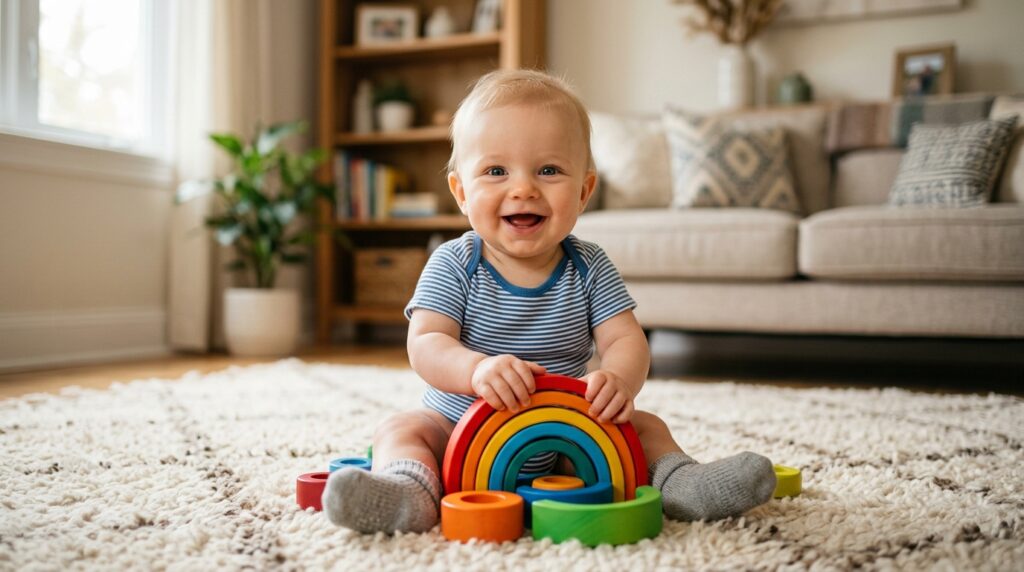
- 9 to 12 months: The infant-to-toddler transition begins. Expect your baby to pull to a stand, cruise along furniture, and eventually take their first steps. You will hear their first words, see their personality emerge, and likely deal with separation anxiety as their social and emotional development peaks.
Quick Summary
The newborn stage is a fleeting, demanding period of rapid growth and adaptation. Medically it lasts the first 28 days, but practically you will be in “newborn survival mode” for about the first 3 months.
Focus on safe sleep (alone, on the back, in a crib), feeding on demand, monitoring wet diapers, and getting through the sleep deprivation. Give yourself grace, seek support for your mental health, and remember that easier days, filled with smiles, giggles, and more predictable routines, are just around the corner.