
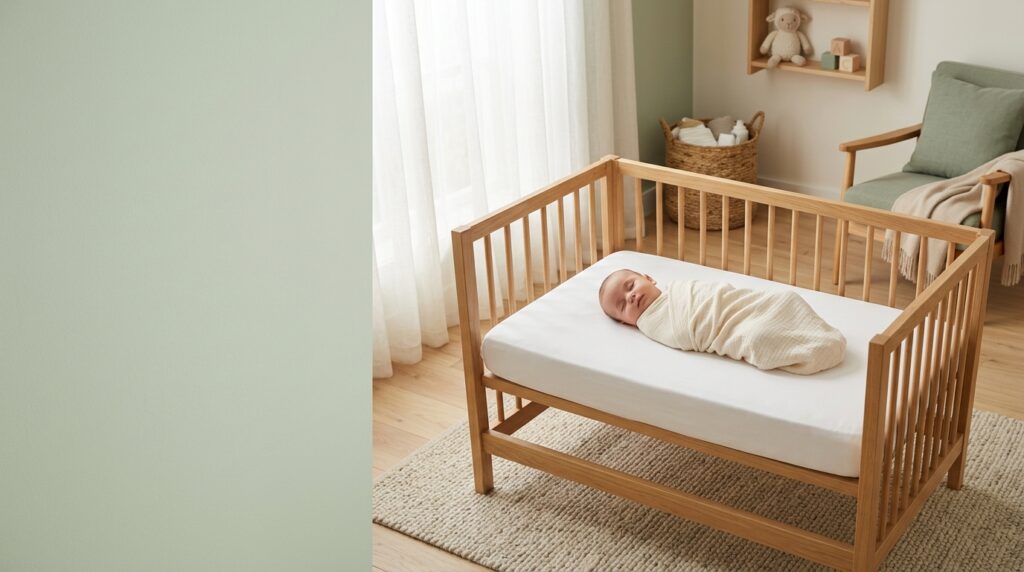
Safe infant sleep means placing your baby on their back, alone, on a firm, flat surface in a crib, bassinet, or play yard, for every sleep until their first birthday. These evidence-based guidelines protect babies under one year of age from SIDS and SUID. Following them can reduce the risk of SIDS and accidental suffocation by up to 50 percent.
Bringing a newborn home is one of life’s most joyful experiences, but it also comes with an overwhelming list of rules and worries. Safe infant sleep is chief among them. Understanding the science behind the recommendations offers true peace of mind, and the steps themselves are simple.
What Is Safe Infant Sleep and Why Does It Matter So Much?
Safe infant sleep is a set of guidelines designed to protect babies from sleep-related hazards. Every new parent quickly learns that how and where a baby sleeps is critical to their health. The guidelines exist to prevent tragic, sudden infant deaths, primarily Sudden Infant Death Syndrome (SIDS) and Sudden Unexpected Infant Death (SUID).
To understand these risks, it helps to know how pediatricians categorize sleep-related infant deaths:
- Sudden Unexpected Infant Death (SUID): An umbrella term for any sudden, unexpected death of an infant under age one, whether explained or unexplained prior to investigation.
- Sudden Infant Death Syndrome (SIDS): A subcategory of SUID. It is the sudden, unexplained death of an otherwise healthy infant under one year of age, which remains unexplained even after a thorough case investigation, autopsy, and scene review. SIDS remains the leading cause of death in infants between 1 month and 1 year of age.
- Accidental Suffocation and Strangulation in Bed (ASSB): Explained sleep deaths caused by physical hazards in the sleep environment. This includes:
- Accidental suffocation: When loose bedding, pillows, or a soft mattress block a baby’s nose and mouth.
- Strangulation: When a baby’s neck becomes trapped by cords, ribbons, or gaps in furniture.
- Entrapment: When a baby becomes wedged between a mattress and a wall, bed frame, or another surface.
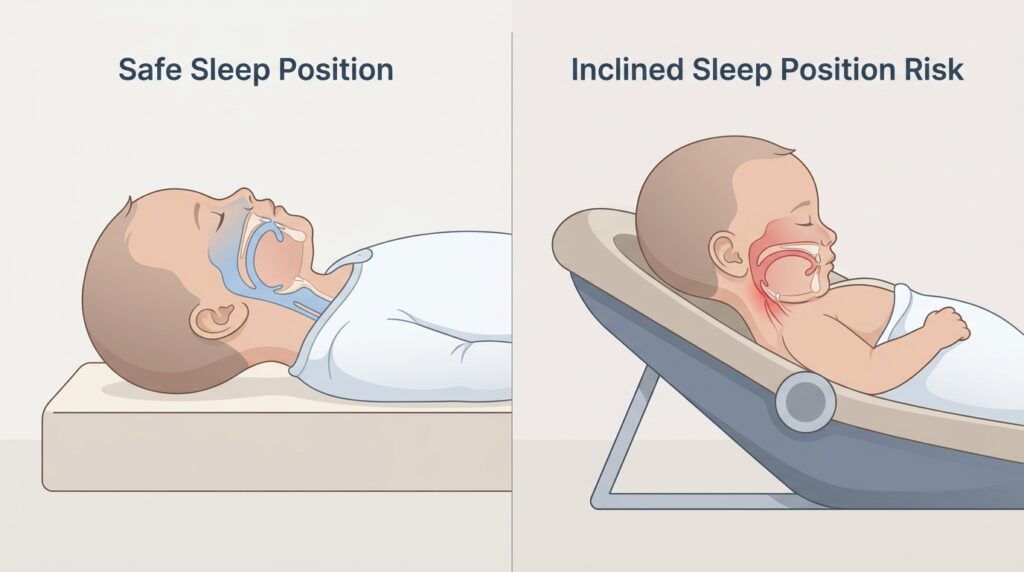
- Positional asphyxia: When a baby’s body or neck is placed in a position that compromises their airway, preventing them from breathing.
The first six months are the most critical, because the vast majority of sleep-related infant deaths occur during this window. Decades of public health campaigns, such as the landmark “Back to Sleep” campaign launched in the 1990s, have proven that changing a baby’s environment dramatically cuts mortality rates.
Despite these advances, stark racial disparities in SUID persist. Black, Native American, and Alaska Native infants experience sleep-related death rates more than double those of white infants. Closing this gap requires culturally sensitive education, non-judgmental caregiver counseling, equitable access to safe sleep products, and active support from healthcare providers and infant sleep-death prevention programs nationwide.
What Is a Bassinet and How Does It Compare to Cribs and Play Yards?
A bassinet is a small, compact bed designed for young infants during their first few months of life. If you are preparing a nursery and wondering what is a bassinet and how it differs from other sleep options, the key difference is size: it typically features low, breathable sides and a smaller footprint than a standard full-size crib. That makes it ideal for keeping close to an adult bed.
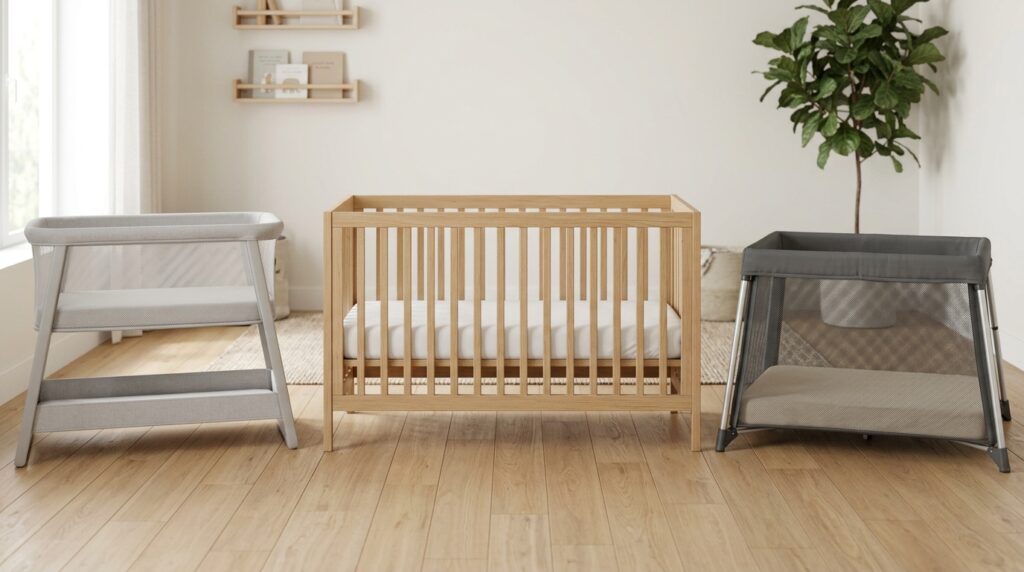
You have three primary safety-approved options for infant sleep:
- Bassinets: Smaller, portable, and elevated to waist height for easy middle-of-the-night access.
- Standard cribs: Full-sized, sturdy, and built to last through toddlerhood. They feature fixed side rails (drop-side cribs were banned due to entrapment risks).
- Portable cribs and play yards: Versatile, foldable structures with mesh sides and a thin, firm floor pad. Excellent for travel or room-sharing in smaller spaces.
Every one of these surfaces can provide a safe sleep environment, provided they meet current Consumer Product Safety Commission (CPSC) crib safety standards.
How Long Should a Newborn Sleep in a Bassinet?
Most infants use a bassinet from birth until somewhere between 3 and 6 months of age. When asking how long should a newborn sleep in a bassinet, it helps to track developmental milestones rather than stick to a rigid calendar. Move your baby to a full-sized crib or play yard as soon as they reach any of the following markers:
- Weight and height limits: The baby exceeds the manufacturer’s specific weight limit (often 15 to 20 pounds).
- Rolling over: The baby begins pushing up on hands and knees or shows signs of rolling over.
- Physical mobility: The baby can sit up independently or push against the sides, creating a tipping hazard.
When choosing or setting up a bassinet or bedside crib (a specialized bassinet designed to sit right next to an adult mattress), check that it has these key safety features:
- Flat, level base: A sturdy structure that does not tilt. Avoid cantilevered designs supported on only one side, which can incline dangerously under weight.
- Firm, thin mattress: A firm surface that does not yield under the head’s weight, with zero gaps larger than half an inch between the mattress edge and the frame wall.
- Mesh sidewalls: All-mesh or fully breathable side panels to ensure continuous airflow if your baby presses their face against the edge.
- Safety certifications: Clear documentation showing compliance with CPSC standards. Avoid recalled cribs, antique cribs, broken frames, or second-hand options with missing parts or instructions.
- Proper placement: Place the bassinet far away from hazard areas, including dangling cords, blinds, wires, or windows near cribs that pose strangulation risks.
Why Is Back Sleeping the Safest Position for My Baby?
Back sleeping is safest because it keeps your baby’s airway wide open. Always place your baby on their back for every single sleep session, both nighttime and daytime naps, until their first birthday. This is the “B” in the ABCDs of Safe Sleep: Alone, on their Back, in a Crib, and Don’t smoke.
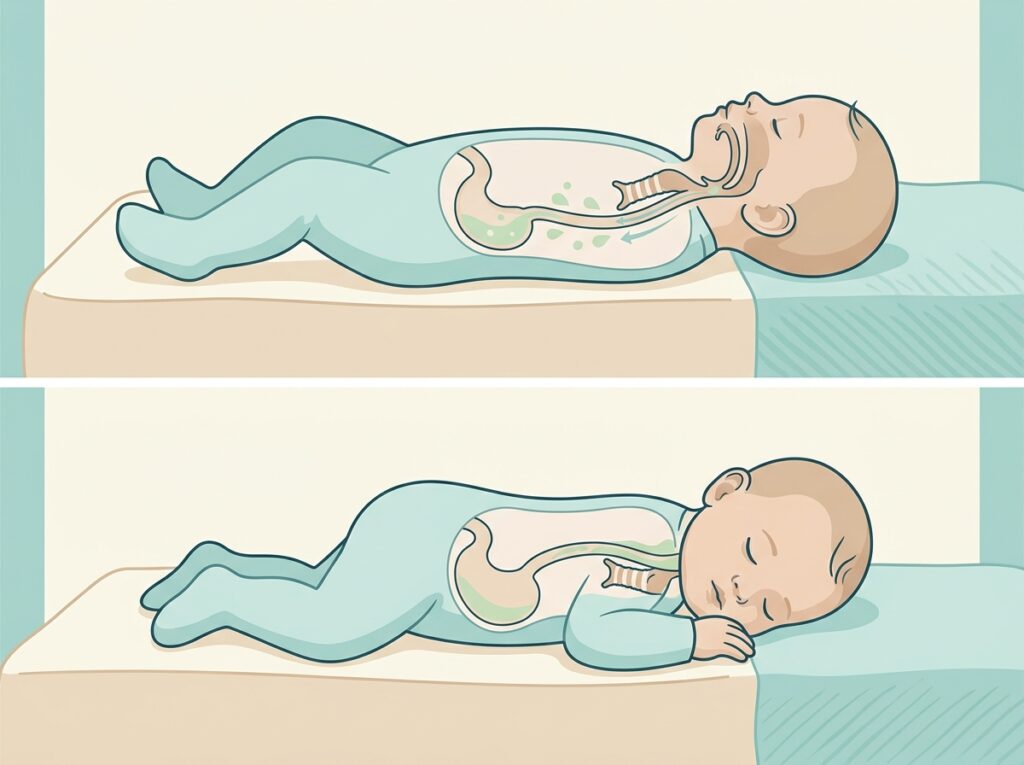
The reason comes down to anatomy. The trachea (windpipe) sits on top of the esophagus (food pipe). When a baby is on their back, swallowed fluids or reflux naturally drop down into the esophagus due to gravity, rather than entering the airway.
When a baby is placed on their stomach, fluids can collect at the opening of the trachea, significantly increasing choking hazards and airway obstruction.
[IMAGE: An anatomical illustration demonstrating how back sleeping keeps the trachea clear while stomach sleeping allows fluids to pool near the windpipe]
Can Newborns Sleep on Their Side?
No. Parents often ask, can newborns sleep on their side, or can babies sleep on their side? The clear, evidence-based answer from pediatric experts is no. Side sleeping is inherently unstable. An infant placed on their side can easily tilt forward onto their stomach, the highest-risk position for SIDS and suffocation, before they have the neck strength to lift their head.
When Can a Baby Sleep on Their Stomach?
Keep placing your baby on their back for every sleep period until 12 months of age. So, when can a baby sleep on their stomach? Only once they can do it on their own.
Once your baby independently develops the physical strength to roll from back to tummy and from tummy to back, you do not need to roll them back onto their spine if they flip over during sleep. At that stage, their neuromuscular development is mature enough that they can adjust their head to keep their airway open.
Note: If your baby has specific congenital medical conditions, your pediatrician may provide tailored positioning guidance. Always follow your physician’s personalized advice.
What Makes an Infant Sleep Surface Truly Safe or Unsafe?
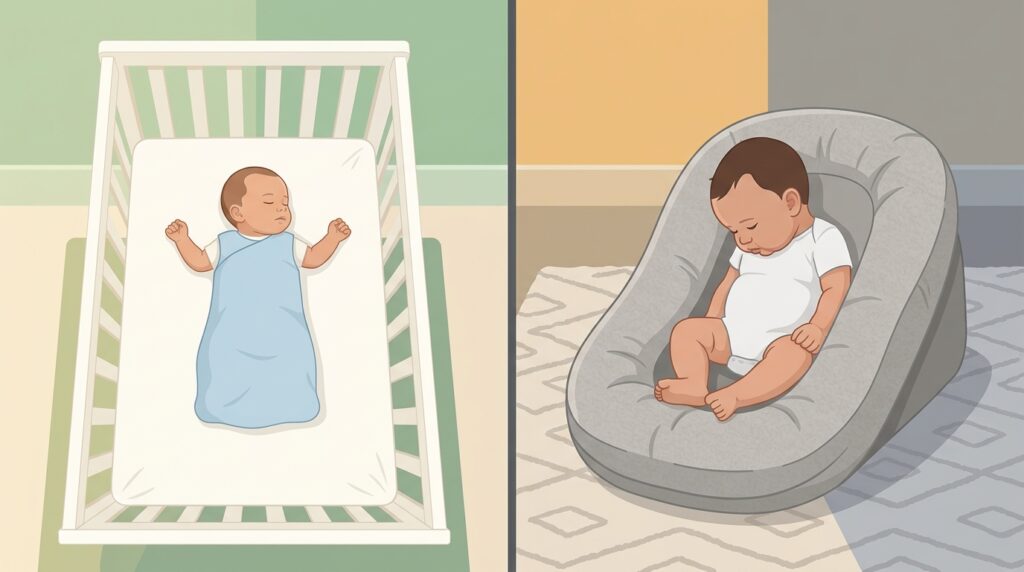
The sleep surface is just as vital as the sleep position, and a safe surface must be firm, flat, and completely level. A surface is considered “firm” if it does not indent or conform to the shape of your baby’s head or body when they lie down.
The CPSC mandates that infant sleep surfaces cannot have an incline greater than 10 degrees. Inclined sleep surfaces, sloped sleep products, hammock-style beds, and baby loungers force an infant’s heavy head forward, causing their chin to drop to their chest. This neck flexion causes positional asphyxia, silently shutting down their small airway.
Strictly avoid the following unsafe surfaces and materials:
- Adult mattresses and memory foam: Too soft; causes dangerous body indentations.
- Couches, sofas, and armchairs: The absolute most dangerous places for an infant to sleep. A baby can slip into cushions or suffocate against soft upholstery.
- Waterbeds, air mattresses, and pillow-top pads: Present high risks of sinking, rebreathing carbon dioxide, and entrapment.
- Sheepskins and plush coverings: Soft fibers can easily block nostrils and mouth.
The golden rule for bedding is simple: a completely bare crib. The mattress should be covered only by a tight-fitting sheet designed specifically for that product model. Keep all soft items out of the sleep space, including:
- Pillows, comforters, quilts, and heavy blankets
- Loose bedding or non-fitted sheets
- Crib bumpers (banned nationally under the Safe Sleep for Babies Act)
- Stuffed toys, soft objects, or loveys/cloths
- Sleep positioners, wedges, and weighted blankets or swaddles
How Can I Practice Room-Sharing Without Bed-Sharing Hazards?
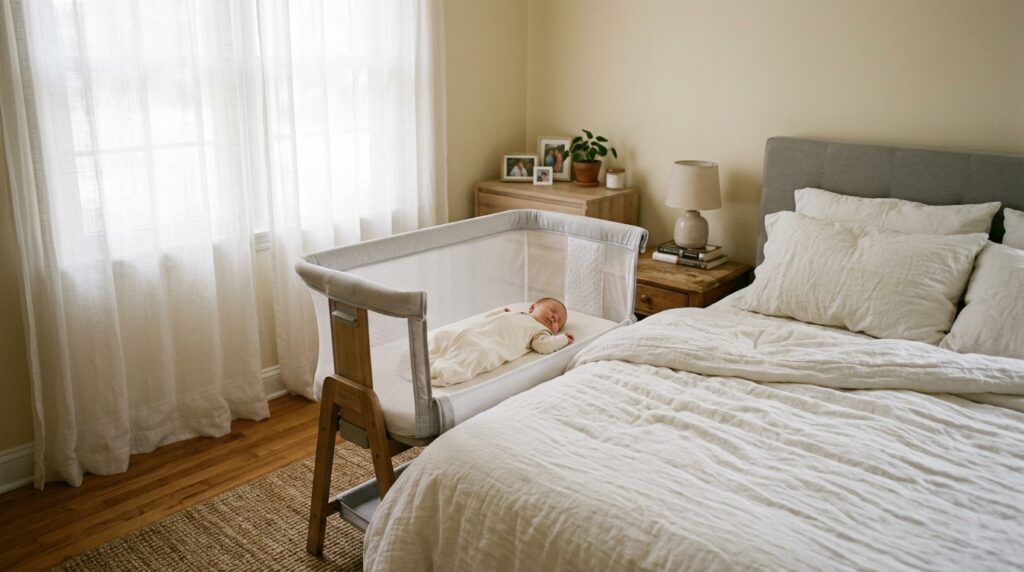
The American Academy of Pediatrics (AAP) strongly recommends room-sharing without bed-sharing. This means keeping your baby’s crib, bassinet, or play yard right next to your adult bed, ideally for the first 6 months and up to the first year. Room-sharing keeps your baby within easy sight and reach, makes middle-of-the-night feeding and monitoring easy, and cuts the risk of SIDS by up to 50 percent.
Bed-sharing (sharing an adult mattress, couch, or chair for sleep) introduces extreme risks of accidental suffocation, strangulation, and entrapment from adult bedding, heavy limbs, or soft surfaces.
If you bring your baby into a co sleeping bedroom or adult bed for feeding or comforting, always return them to their own bare bassinet or crib as soon as you are finished.
If there is any chance you might accidentally fall asleep while nursing or holding your baby in bed, prepare the space beforehand by clearing all pillows, comforters, adult blankets, and loose bedding away from your immediate area. Never feed a baby on a couch or armchair if you feel drowsy. Falling asleep on a sofa with an infant is one of the single highest risk factors for accidental infant death.
Bed-sharing is exceptionally dangerous under any circumstances, but it becomes critically high-risk if:
- The baby is under 4 months old, or was born prematurely or with low birth weight.
- Any adult in the bed is a smoker (or if the mother smoked during pregnancy).
- Any adult has consumed alcohol, sedating medications, opioids, or illegal substances that impair caregiver alertness.
- The sleeping surface is a sofa, couch, armchair, or soft mattress.
- The bed is shared with siblings, pets, or multiples (twins/triplets).
How Do Swaddle Sacks, Pacifiers, and Tummy Time Help Keep Baby Safe?
Several everyday care practices offer powerful protection against sleep risks when used correctly.
Swaddling Safety and Wearable Blankets
Stop swaddling the moment your baby shows any sign of attempting to roll over, often as early as 2 to 3 months of age. A swaddled baby who rolls onto their stomach cannot use their arms to free their face, creating an immediate risk of suffocation.
Until then, swaddling can calm a newborn by simulating the cozy feeling of the womb. Make sure the wrap is snug around the chest but loose around the hips to allow natural leg movement.
Once swaddling ends, transition to lightweight wearable blankets or sleep sacks. Keep sleepwear lightweight and avoid hats indoors once home from the hospital to prevent overheating. Overheating is a key contributor to SIDS, so keep the baby’s room at a temperature comfortable for a lightly clothed adult, and check their chest or neck for sweat or excess heat.
The Protective Power of Pacifiers
Offering a pacifier at bedtime and naptime reduces the risk of SIDS significantly, even if the pacifier falls out of the baby’s mouth after they fall asleep. If you are breastfeeding, wait until nursing is well-established before introducing a pacifier.
Never attach pacifiers to strings, ribbon clips, or stuffed animals in the sleep environment, as these introduce fatal strangulation and suffocation hazards.
Supervised Tummy Time
Daily supervised tummy time while awake is essential from early infancy, because babies spend so much time resting flat on their backs. Tummy time:
- Builds crucial neck, shoulder, and core muscle strength needed to roll and sit up.
- Prevents positional plagiocephaly (a misshapen flat spot on the back of the head).
- Limits prolonged restraint in sitting devices, car seats, and swings.
What Other Habits and Health Choices Protect My Sleeping Baby?
A safe sleep environment extends beyond the nursery layout, because lifestyle choices, routine healthcare, and daily habits directly affect your infant’s safety.
- Breastfeeding and human milk: Breastfeeding for six months or longer significantly reduces the risk of SIDS. The protective effect increases with exclusivity, but any amount of human milk provides measurable benefits.
- Smoke, nicotine, and substance avoidance: Keep your baby’s environment completely smoke-free. Exposure to secondhand smoke, cigarette fumes, vaping, nicotine, or marijuana damages an infant’s autonomic respiratory control. Never care for an infant while under the influence of alcohol or drugs.
- Routine pediatric care and vaccinations: Keep up with all well-baby checkups. Evidence shows that routine infant immunizations have a protective effect against SIDS.
- Safe sleep during illness: When babies have respiratory infections, nasal congestion, a cough, or a runny nose, their risk of breathing difficulty increases. Continue placing your sick baby on their back on a firm, flat surface, and consult your pediatrician promptly for guidance on managing their illness safely.
- Sitting devices are for travel, not sleep: Car seats, strollers, infant swings, and bouncy seats are not designed for routine sleep. If your baby falls asleep in a sitting device, move them to a firm, flat crib or bassinet as soon as you arrive at your destination.
- Avoid unproven products: Be cautious of commercial products claiming to prevent SIDS. Sleep positioners, wedges, special anti-SIDS mattresses, and home cardiorespiratory monitors have no proven scientific backing for healthy infants and can introduce dangerous suffocation hazards.
For more guides on your baby’s sleep, you can find our full collection here.
Quick Summary: Your Daily Safe Sleep Checklist
Creating a safe sleep space for your baby comes down to simple, proven routines. Use this quick reference to keep your nursery safe every day:
| Core Category | Safe Sleep Standard | Practice to Avoid |
|---|---|---|
| Position | Always place baby flat on their back for naps and night. | Side sleeping, stomach sleeping, or using sleep wedges. |
| Surface | Firm, flat, level mattress in a CPSC-compliant crib or bassinet. | Couches, adult beds, memory foam, or inclined sleepers (>10°). |
| Bedding | Completely bare sleep space with just a tight fitted sheet. | Pillows, soft blankets, crib bumpers, plush toys, or weighted sacks. |
| Environment | Room-share for at least 6 months; keep room at a cool, comfortable temp. | Bed-sharing, room smoking, over-bundling, or keeping hats on indoors. |
| Protection | Supervised tummy time awake; offer a pacifier at sleep times. | Swaddling after baby attempts to roll; letting baby sleep in car seats at home. |
By following these evidence-based steps, and ensuring every grandparent, babysitter, and caregiver follows them too, you create a secure environment where your baby can sleep safely, and you can rest easy.