

If your baby or toddler who was sleeping fine has suddenly started waking all night, fighting naps, or battling bedtime, you’re almost certainly dealing with a sleep regression — a temporary, developmentally-driven dip in sleep, not a sign that something is wrong. It happens to nearly every family, it doesn’t last forever, and there’s a lot you can do to shorten it. This guide walks through what’s happening, how long it typically lasts at each age, and exactly how to get things back on track — you can browse more sleep guides here.
What Is a Sleep Regression, Anyway?
A sleep regression is the common parenting term for a temporary decline in a baby’s or toddler’s previously more settled sleep. You might notice more night waking, shorter naps, trouble falling asleep, or increased fussiness.
While it can feel like a step backward, many experts prefer to frame these as developmental progressions rather than setbacks. The Cleveland Clinic notes that regressions tend to cluster around major developmental changes and growth spurts. Importantly, a sleep regression isn’t a medical diagnosis — it’s a phase, and it passes.
How Can I Tell If It’s a Regression or Something Else?
Before labeling a rough patch a “regression,” it’s worth ruling out other causes first — not every sleep disruption is developmental.
Signs pointing to a true regression include frequent night waking, short “catnaps,” nap refusal, bedtime resistance, early morning waking, split nights (long awake stretches in the middle of the night), increased clinginess, separation distress, and more frequent tantrums. You might even catch your child practicing a new skill in the crib, like sitting up or babbling.
Before assuming it’s a regression, check for these non-regression causes:
- Illness: Fever, coughing, or other signs of being unwell can disrupt sleep on their own.
- Physical discomfort: A dirty diaper, hunger, teething pain, or an overheated room are common culprits.
- Persistent problems: If sleep trouble drags on well past a developmental leap, it may point to behavioral insomnia of childhood (where a child depends on a parent to fall asleep) or another underlying issue like sleep apnea.
Why Do Sleep Regressions Happen?
Sleep regressions are driven by brain development, cognitive leaps, and shifts in sleep architecture — not bad habits.
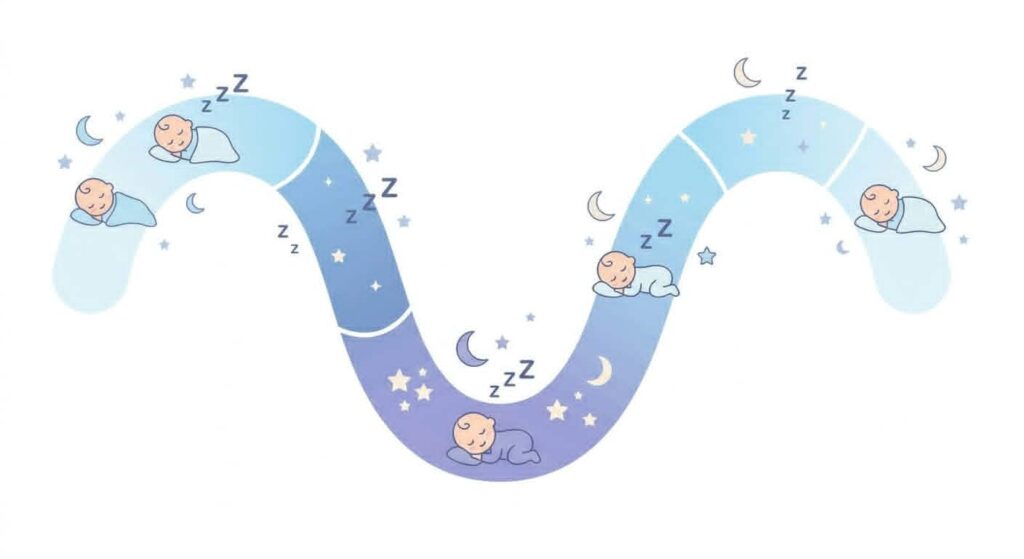
Around 4 months, a baby’s sleep becomes more organized and starts cycling through lighter and deeper phases, much like adult sleep. Those lighter phases make brief wake-ups between cycles more likely, and if a baby hasn’t yet learned to link sleep cycles on their own, they’ll call out for help getting back to sleep. On top of that, milestones like crawling, walking, or talking keep the brain unusually active, which can spill over into disrupted sleep.
When Do Babies Have Sleep Regressions? (The Age-by-Age Timeline)
Timing varies by child, but certain developmental triggers show up at fairly predictable ages. Here’s what tends to happen, month by month:
- 6 week sleep regression: At 6 weeks, sleep is often fragmented into short bursts because a newborn’s circadian rhythm hasn’t matured yet. A cognitive leap, longer wake windows, and the wearing-off of maternal melatonin all play a role in this 6–8 week sleep regression.
- 3–4 month & 4 month sleep regression: This is the most talked-about stage. The American Academy of Pediatrics (AAP) notes that regular sleep cycles generally develop around this age, and as sleep matures into light and deep phases, brief awakenings become more common.
- 5 month sleep regression: The sleep regression five months in is often just unsettled sleep continuing from the 4-month transition.
- 6 month sleep regression: Night waking may persist as six months brings big changes — starting solids, teething, rolling or sitting, and nap restructuring.
- 7 month sleep regression: Babies often become more resistant to naps or wake more at night around this point.
- 8–10 month sleep regression: More night waking and nap disruption are common around 8 months. This window — including the 10 month sleep regression (or ten month sleep regression) — is notorious for separation anxiety, object permanence, crawling, and pulling to stand.
- 11 month sleep regression: Sleep can turn inconsistent right before the first birthday. If you hit an eleven month sleep regression (or 11th month sleep regression), protect naps and dial back stimulation.
- 12 month sleep regression: Expect more bedtime resistance, night waking, or nap changes, driven by walking, language development, and nap-transition pressure — though it’s usually too early to drop to one nap.
- 13 month sleep regression & 14 month sleep regression: Sleep may stay bumpy after the 12-month transition, especially around nap or bedtime shifts.
- 15 month sleep regression: This is the classic two-naps-to-one-nap age, so nap refusal, early waking, or bedtime resistance are common.
- 16 month sleep regression: A sleep regression 16 months in is largely tied to that same nap transition, plus a blossoming sense of independence.
- 18 month sleep regression: Bedtime resistance, night waking, shorter naps, and a need for extra reassurance tend to peak around a sleep regression 18 months in, fueled by an independence “explosion,” language growth, new physical skills, molars, and a peak in separation anxiety.
- 19, 20, and 21 month sleep regressions: A 20 month sleep regression (or the nearby 19 or 21 month stretch) is usually a lingering effect of the 18-month change, or an early sign of the 2-year boundary-testing phase.
- 2 year sleep regression: Two-year-olds are working through autonomy and boundary testing, big leaps in imagination and language, possible life changes like a new sibling, and the crib-to-bed transition.
- 3 year sleep regression: Driven by dropping daytime naps entirely, nighttime fears, nightmares, and preschool or daycare changes.
How Long Will This Sleep Regression Last?
The good news: sleep regressions are temporary. The Cleveland Clinic notes they commonly last about one to two weeks, though it varies by child — a 2–6 week duration (or 3–6 weeks) is normal for major milestones.
Sometimes regressions drag on longer than expected, usually because the disruption has turned into a habit through new sleep associations. For example, if you start rocking your baby to sleep during the regression, they may keep expecting it long after the developmental leap has passed.
How Much Sleep Does My Baby Actually Need?
Total sleep across 24 hours is a more useful benchmark than expecting uninterrupted nighttime sleep.
- Birth–3 months: About 14–17 hours, per the Cleveland Clinic.
- 4–12 months: 12–16 hours including naps, per the CDC and American Academy of Sleep Medicine.
- 1–2 years: 11–14 hours including naps, per the CDC and American Academy of Sleep Medicine.
Age-appropriate schedules and awake windows matter because both under- and over-tiredness backfire: an under-tired baby fights sleep, while an over-tired one gets a cortisol spike that makes settling even harder.
How Do Nap Transitions Affect Night Sleep?
Nap transitions are one of the biggest drivers of regressions, and they follow a fairly predictable pattern.
- 3 to 2 naps: Typically happens around 6–8 months.
- 2 to 1 nap: Usually lands around the 15 month or 18 month nap transition. Watch out for 12 month nap transition confusion — many 12-month-olds resist a nap, but dropping to one too early causes serious overtiredness.
- Dropping all naps: A 2-year nap refusal is common, but most kids don’t fully give up naps until age 3. “Quiet time” is a useful bridge in the meantime.
How Do I Fix a Sleep Regression? (Solutions & Strategies)
Consistency — not a new approach — is what resets sleep fastest.
- Don’t change your strategy constantly: Keep bedtime and nighttime responses predictable.
- Encourage independent settling: The AAP recommends putting babies down drowsy but awake so they can practice falling asleep on their own.
- Make night responses calm and boring: Keep lights low, speak softly, and skip playful interaction.
- Don’t rush in instantly: If a 6-month-old briefly stirs but is safe and not distressed, give it a moment before intervening.
- Try a 7-day recovery plan: Reset the schedule, tighten the bedtime routine, hold steady for a full week, then reassess.
Should I Change Our Bedtime Routine?
No — if anything, lean into it harder. The NHS recommends a calm, predictable bedtime routine at the same time and in the same order every night.

Keep it short and predictable — the classic 4 B’s are Bath, Brush teeth, Book, and Bed.
The sleep environment matters too: keep the room dark, keep the temperature comfortable, limit screen time before bed, and remember that blue light can suppress melatonin production.

Is It Okay to Sleep Train During a Regression?
Yes — as long as you stay consistent. Whether you choose Cry-it-out, Graduated check-ins (Ferber), or Check-and-console, pick one method and stick with it for several nights. The goal is helping your child build the self-soothing skills to link sleep cycles on their own.
What About Toddler-Specific Sleep Strategies?
Toddler regressions are largely about boundary testing, so handling them means setting clear limits and keeping negotiations short.
- “One more story!”: The NHS advises setting a firm limit — one story, a goodnight, and returning the child to bed with minimal fuss if they get up.
- Give limited choices: “Do you want the red pajamas or the blue ones?”
- Toddler clocks: These light up green when it’s time to wake up, giving kids a visual boundary.
- Comfort objects/loveys: Highly recommended to ease separation anxiety.
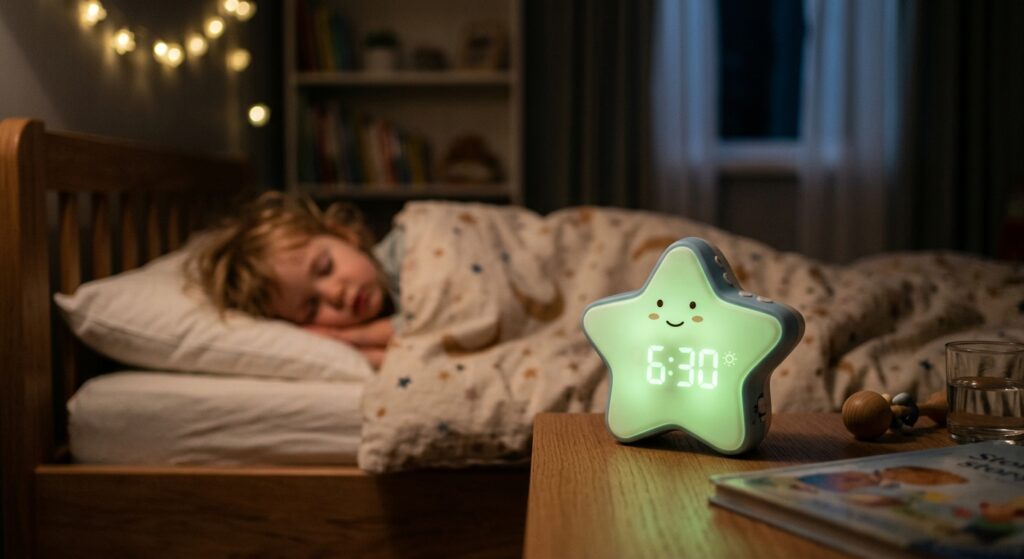
Crib and bed transitions are also about timing — avoid moving to a toddler bed too early (before 2.5–3 years) unless climbing out has become a safety issue.
Nighttime fears typically emerge between 2 and 3 years old, as fear of the dark, night terrors, and nightmares begin to surface alongside emotional development. Validate your child’s fears without reinforcing them — for instance, avoid “spraying for monsters,” which can confirm that monsters are real.
What Are the Most Common Mistakes Parents Make?
- Changing too many things at once during a regression.
- Introducing habits you don’t want long-term, like co-sleeping.
- Dropping naps too early.
- Misreading regression signs or missing sleep cues.
- Expecting things to resolve instantly.
When Should I Call the Doctor?
Most sleep bumps are normal, but a few signs warrant a call to your pediatrician:
- Sleep problems last beyond 6 weeks.
- You notice loud snoring, pauses in breathing, or unusual sleep movements.
- There’s excessive daytime sleepiness.
- The sleep deprivation is becoming unmanageable for your family.
Frequently Asked Questions
How long does sleep regression last? Usually 2 to 6 weeks.
Do all babies experience regressions? No — research hasn’t shown that every child hits them at fixed, predictable ages.
What’s the fastest way to end a regression? Stick rigidly to your established healthy sleep habits and routines.
Is my baby sick or having a regression? Always check for fever, appetite changes, or other physical symptoms first.
Why is my toddler suddenly not sleeping? Usually a mix of boundary testing, imagination growth, and language development.
Is a 3-year-old sleep regression normal? Yes — it’s often tied to dropping the final nap.
Should I use cry-it-out during a regression? You can, as long as your child is old enough (typically over 4–6 months) and you’re comfortable staying consistent.
Can sleep regression affect daytime behavior? Absolutely — overtiredness leads to fussiness and tantrums.
Does screen time worsen sleep regression? Yes, blue light suppresses sleep-inducing hormones.
Are the 19/20/21 month regressions separate? Usually not — they’re typically lingering effects of the 18-month leap or early signs of the 2-year boundary-testing phase.
Quick Summary
Sleep regressions are exhausting but completely normal — a byproduct of major leaps in your child’s brain and body. The fastest way through: rule out illness, hold firm to a solid bedtime routine, keep nighttime wake-ups boring, and avoid creating sleep habits you don’t want to keep long-term. You’ll get through this.