
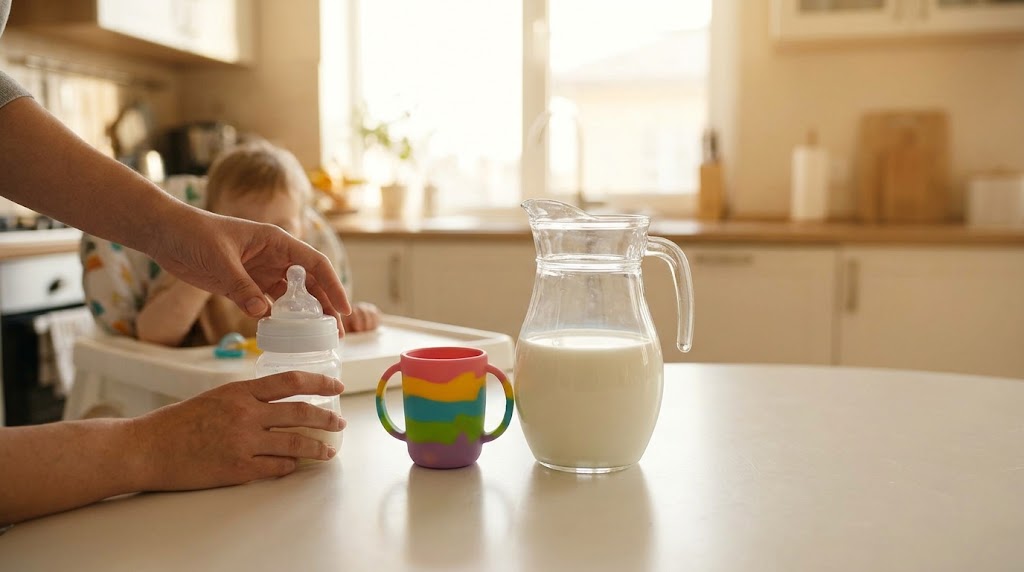
Most healthy babies can stop infant formula at 12 months, when plain, pasteurized whole cow’s milk (or a fortified, unsweetened dairy alternative) can become their main milk drink alongside a balanced diet. If you’re wondering when should you stop formula or how to make the switch without a fuss, you’re not alone. This guide covers when to stop giving formula, how to wean gradually, and what to offer instead.
When should you stop formula feeding?
For most healthy babies, the answer is 12 months. If you’re asking when do you stop giving a baby formula, the first birthday is the standard milestone. Before then, breast milk and/or standard infant formula should be the main source of nutrition. Plain cow’s milk, goat’s milk, sheep’s milk, and plant-based milks should not be the main drink before age 1.
Once your child reaches 12 months, infant formula, follow-on formula, growing-up milk, and toddler milk are not needed.
Quick age guide for formula weaning
- 9 to 11 months: Stick to breast milk and/or standard infant formula. Don’t give cow’s milk as the main drink before 12 months, because it doesn’t have the right nutrient balance for infants.
- 12 to 24 months: Transition to plain pasteurized whole milk. At 12 months, parents can switch from infant formula to plain, unsweetened, pasteurized whole cow’s milk or a fortified unsweetened dairy alternative.
- 2 years and older: Transition to plain pasteurized fat-free (skim) or low-fat (1%) milk.
How do I know if my baby is ready to stop drinking formula?
Readiness comes down to age, diet, and drinking skills. Every baby is different, so when can you stop formula feeding for your child? Look for these signs:
- They’re at least 12 months old. This is the key readiness point for whole milk as the main drink.
- They eat a range of solid foods. A varied diet with fortified foods is recommended for toddlers 12 months and older, rather than relying on formula.
- They can drink from a cup. Moving to a cup between 12 and 18 months is a practical target.
- Their milk intake is moderate. A toddler who accepts milk but also eats iron-rich foods is on a healthier track than one who fills up on milk.
Signs your baby is not ready
Babies born prematurely should be assessed by corrected age. If your baby was born early, calculate readiness based on their corrected age and consult your doctor. Also seek guidance for poor growth, a very limited diet, or suspected iron deficiency. In these cases, a pediatrician should complete a focused nutritional assessment and adjust solid-food intake or vitamins as needed.
What is the difference between formula and whole milk?
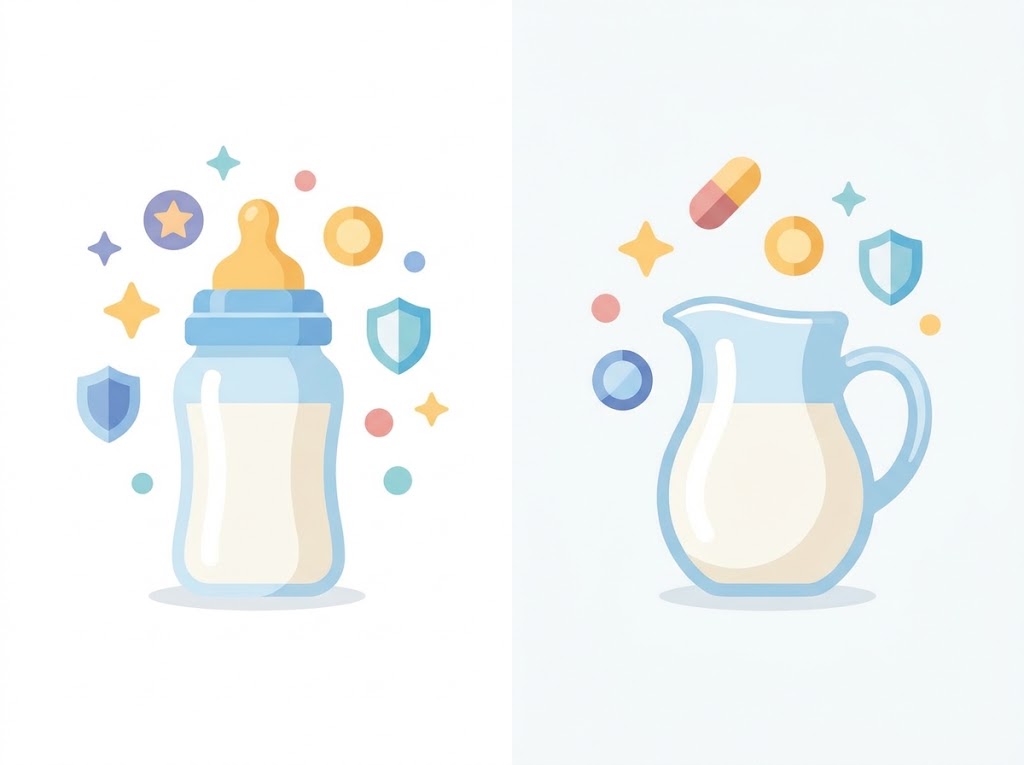
Formula is designed for the first year; whole milk works best after it. Understanding when to stop baby formula means understanding why the switch happens at all. Infant formula is uniquely designed to mimic breast milk, providing complete nutrition for a baby’s first year of life.
After 12 months, whole milk provides protein, calcium, vitamin D, vitamin A, and zinc. A varied solid-food diet supplies iron and other nutrients that milk alone cannot provide.
It’s important to wait until the first birthday because cow’s milk is low in iron. Giving it as a main drink before 12 months raises the risk of iron-deficiency anemia and allergies. As toddlers eat more solid foods, they need less milk. Milk should complement, not replace, a varied diet.
How to wean off of formula and switch to whole milk
Go slowly: the switch can be done gradually. When asking how to wean off of formula, experts recommend taking it slow, and the CDC says a gradual approach works well.
- Start small. The CDC suggests starting by replacing one formula feeding with cow’s milk to help your child transition.
- Ditch the bottle. For children 12 months or older, offer whole cow’s milk or a fortified unsweetened dairy alternative in a cup. Gradual weaning helps children adjust to the new taste and the cup.
Sample 7-day transition plan
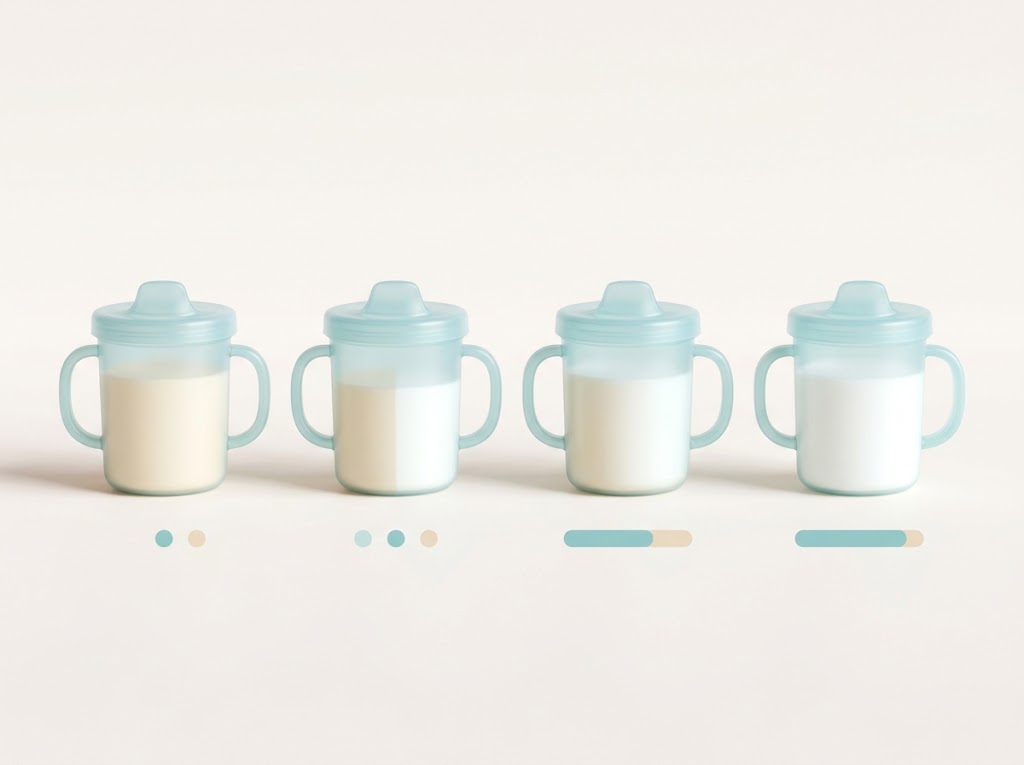
Mixing formula with whole milk can help babies accept the new taste. When switching from formula to whole milk, always prepare powdered formula with water first, according to package directions, before mixing it with whole milk.
- Days 1-2: 75% prepared formula mixed with 25% whole milk.
- Days 3-4: 50% prepared formula mixed with 50% whole milk.
- Days 5-6: 25% prepared formula mixed with 75% whole milk.
- Day 7: 100% whole milk in a cup.
Nighttime bottles and formula weaning
The bedtime bottle is often the hardest to drop. Many parents wonder when to stop formula at night. To transition away from the bottle, start by offering milk in a cup with dinner instead of right before bed. This helps prevent bottle-related cavities and establishes healthier drinking habits.
What kind of milk and drinks should a 1-year-old have?
Plain whole milk and water are the best choices. If you want to know what babies can drink after formula, here are the best options for a one-year-old:
- Whole cow’s milk: For children aged 12–24 months, provide plain pasteurized whole milk. AAP guidance says 16–24 ounces (2–3 cups) daily, though needs vary with solid-food intake.
- Water: Fresh water should be a regular beverage alongside meals and snacks.
- No sugar: Don’t add sugar or flavoring. Use plain, unsweetened, pasteurized whole cow’s milk or fortified unsweetened dairy alternatives.
Sample feeding schedule for a 1-year-old
A balanced day usually includes three small meals and two snacks.
- Breakfast: Scrambled eggs, berries, and 4-6 oz of whole milk in a cup.
- Morning snack: Sliced banana and water.
- Lunch: Shredded chicken, soft cooked carrots, and 4-6 oz of whole milk.
- Afternoon snack: Cheese slices, whole grain crackers, and water.
- Dinner: Whole wheat pasta with meat sauce, green beans, and 4-6 oz of whole milk.
Note: Keep total milk within 16–24 ounces daily. Too much can reduce appetite for iron-rich foods.
What if my toddler refuses milk, has an allergy, or needs alternatives?
Allergies, lactose intolerance, and pickiness can all complicate the switch. When to stop giving formula isn’t always straightforward, but each situation has a practical path.
- If your child refuses whole milk at first, don’t panic. Keep offering it without pressure, and make sure they’re getting calcium and fats from other dairy sources like full-fat yogurt and cheese.
- If you suspect an allergy, call the pediatrician if your child has symptoms involving frequent crying, spitting up, gas, rash, vomiting, diarrhea, or poor growth. Don’t switch formulas without talking to your child’s doctor.
- For milk alternatives, unsweetened fortified soy drinks are an option for children who cannot drink cow’s milk. Calcium-fortified plant milks can also be a main drink from 12 months in appropriate cases.
Do babies need toddler formula after 12 months?
No. Toddler formula isn’t needed. Many parents ask when do baby stop drinking formula entirely, and whether toddler formula comes next. The short answer is no.
Toddler milks, drinks, and formulas often contain added sugars. They offer no nutritional advantage over a balanced diet with breast milk and/or cow’s milk for most children over 12 months. Avoid supplemental transition or weaning formulas.
If you have a 2 year old still drinking formula, it’s highly recommended to transition them fully to whole milk, lower-fat milk, or a fortified alternative alongside a solid-food diet.

For more feeding guidance, you can browse our feeding and nutrition articles here.
When should I contact my pediatrician?
Check in with your pediatrician about any major dietary change, and reach out right away if you notice:
- Signs of a cow’s milk allergy (rashes, vomiting, diarrhea).
- Poor growth, a very limited diet, or suspected iron deficiency.
- Constipation. Don’t treat it with diet changes alone. Laxatives are first-line treatment for acute or chronic childhood constipation, and diet or fluid changes alone do not break down hard stools. If there’s no improvement within four weeks in a child under one year, refer urgently to a pediatrician.
Frequently asked questions
When should baby stop drinking formula?
Most healthy babies are ready to stop drinking infant formula at 12 months of age.
When do you stop giving formula if the baby was premature?
Follow your preemie’s corrected age, not their chronological age. Always consult your pediatrician before weaning a premature baby off formula.
When should I stop formula at night?
Night weaning can happen around the same time as daytime weaning (12 months). Swap the bedtime bottle for a cup of milk with dinner, and focus on non-food bedtime routines like a bath and a book.
How much formula should a 12-month-old drink?
Formula intake will drop as you transition, and total dairy/milk should end up between 16 and 24 ounces a day. Excessive milk consumption can displace iron-rich foods and increase iron-deficiency risk.
Quick summary
If you’ve been googling “when should I stop formula,” the answer for most healthy babies is 12 months.
- Stop infant formula at 12 months of age.
- Transition to plain, unsweetened, pasteurized whole cow’s milk or a fortified soy alternative.
- Make the switch gradually, replacing one feed at a time or mixing formula with milk.
- Serve milk in a cup rather than a bottle.
- Limit milk to 16-24 ounces per day so they have an appetite for iron-rich solid foods.
- Skip the toddler formulas. They aren’t necessary and often contain extra sugar.