

Most infant gas, fussiness, and colic are normal and are rarely caused by regular cow’s-milk formula. If you suspect the formula is the problem, talk to your pediatrician before switching. If a clinician agrees a change is warranted, there are several gentle stomach formula for infants options, from partially hydrolyzed to hypoallergenic. Below, you’ll learn how to spot true formula intolerance, what the options are, and how to switch safely.
When your little one is crying inconsolably, pulling up their legs, or struggling with trapped wind, it’s natural to wonder if the bottle is to blame. Many parents search for a baby upset stomach formula hoping for a quick fix. Understanding what’s happening in your baby’s developing digestive system first makes the next steps much clearer. For more guides on feeding and nutrition, you can browse our library here.

Is My Baby’s Gas and Fussiness Normal, or Is It Digestive Trouble?
Babies fuss, cry, and produce plenty of gas, and that’s usually normal. According to MedlinePlus, fussiness and colic are common in all infants, and regular cow’s-milk formulas are rarely the underlying cause.
HealthyChildren.org notes that normal infant crying often peaks at about three hours per day around six weeks of age, then declines to one to two hours by three to four months. Colic typically begins early, usually between weeks two and four. It can make babies look like they’re in severe pain: screaming inconsolably, pulling up their legs, and passing gas.
Newborns also have immature digestive systems that are still learning to coordinate bowel movements. You might notice your baby straining, grunting, or crying while passing soft stool. This is a common condition called infant dyschezia, where the baby hasn’t yet learned to relax their pelvic floor while pushing.
Spit-up is also standard for many babies because of a loose lower esophageal sphincter. This is what separates normal reflux from problem regurgitation.
Knowing these age-related patterns helps you see that some discomfort is part of early development, not an automatic sign that you need a baby formula for sensitive stomachs.

How Can I Tell If My Baby’s Formula Isn’t Agreeing With Them?
Certain signs point to true formula intolerance or sensitivity rather than standard newborn fussiness.
A well-tolerated formula typically means comfortable bowel movements, steady weight gain along a healthy growth curve, regular wet and dirty diapers, and a baby who is generally content between feeds. Signs of poor formula tolerance include:
- Persistent gas and fussiness immediately after feeding
- Crying, arching the back, coughing, or sputtering during bottle-feeding
- Frequent or worsening spit-up, choking, or reflux symptoms
- Changes in stool frequency or consistency, or the presence of blood or mucus
- New or worsening skin rashes, eczema, or hiveshttps://www.gastro.org/
- Poor feeding, unfinished bottles, or inadequate daily formula intakehttps://www.gastro.org/
These symptoms can sometimes point toward a cow’s milk protein allergy (CMPA), a cow’s milk protein intolerance, or suspected lactose intolerance. Lactose intolerance is rare in young infants, but milk protein sensitivities need closer clinical evaluation.

What Types of Formula Are Out There for Sensitive Tummies?
Several specialized formula types exist, and the right one depends on your baby’s specific needs. Once a clinician agrees a specialized option is warranted, you’ll find a range of formula for sensitive stomach baby choices. These can also serve as the best formula for babies with gas or sensitivity, and as a baby formula for gas more generally.
- Partially Hydrolyzed Formulas: Often chosen as a newborn gentle stomach formula, these break intact proteins into smaller pieces that are easier to digest. They’re frequently used for formula-fed infants with mild gas and fussiness.
- Extensively Hydrolyzed and Amino Acid-Based Formulas: These hypoallergenic infant formulas are prescribed for suspected cow’s milk protein allergy. The proteins are broken down so thoroughly that the immune system no longer reacts to them.
- Whey-to-Casein and Comfort Formulas: Some adjust protein ratios or add components like soluble starch, prebiotics, and probiotics (such as L. reuteri). These support gut comfort, reduce colic symptoms, or help with constipation and reflux.
- Alternative Protein Bases: Goat milk-based formulas, plant-based soy alternatives, and lactose-reduced formulas offer additional options when standard cow’s milk-based formulas don’t agree with an infant.

Which Ingredients Should I Look For, and Which Should I Avoid?
Reading ingredient labels carefully helps you balance nutritional completeness with digestive tolerance. This applies to any sensitive stomach formula for babies.
- Proteins and Carbohydrates: Look for easily digestible proteins like partially hydrolyzed whey protein. Lactose is the primary carbohydrate in breast milk and is typically well tolerated, though some specialized formulas use alternative carbohydrate sources for specific sensitivities.
- Fats and Oils: Many brands carefully formulate their fat blends and oil compositions. Parents often research components like palm oil or palm olein oil to understand how they influence stool consistency.
- Gut-Supportive Additives: Ingredients like Milk Fat Globule Membrane (MFGM), nucleotides, prebiotics, and probiotics help foster gut development and a healthy microbiome. Omega-3 fatty acids, often sourced from marine algae or fish oil alternatives, support overall infant development.
- Sourcing and Safety: Many families look for organic certification, rigorous contaminant testing, and product transparency, while aiming to avoid artificial additives and unnecessary fillers.
What Are the Popular Sensitive Stomach Formula Brands on the Market?
Many commercial brands target different sensitivities. Parents exploring an infant formula sensitive stomach option will find a wide variety:
- Gentle & Comfort Options: Enfamil NeuroPro Gentlease, Similac Sensitive, Similac Total Comfort, Gerber Good Start GentlePro, Gerber Good Start SoothePro, Bobbie Organic Gentle, Little Spoon Organic Infant Formula, Kendamil Comfort, and Bubs Supreme.
- Hypoallergenic & Specialized Options: Similac Alimentum, Nutramigen, PurAmino, Gerber HA formula, HiPP Comfort, HiPP HA, and Holle Goat.
- Plant-Based Alternatives: Enfamil Simply Plant-Based.
Which brand works best depends entirely on your baby’s individual tolerance and your pediatrician’s guidance. It also depends on whether you want a standard comfort formula or a prescription-grade hypoallergenic product.

How Do I Correctly Switch Formulas Without Upsetting My Baby’s Tummy?
Always consult your pediatrician or healthcare provider before making any change, and avoid frequent or unnecessary switches. Jumping between brands too often can further upset a baby’s developing digestive tract.
When preparing the new product, follow the label instructions precisely. Measure the water first, use the manufacturer’s exact scoop, and never dilute formula with extra water to “help with gas.” The CDC warns that improper dilution can cause dangerous nutritional imbalances and severe health issues.
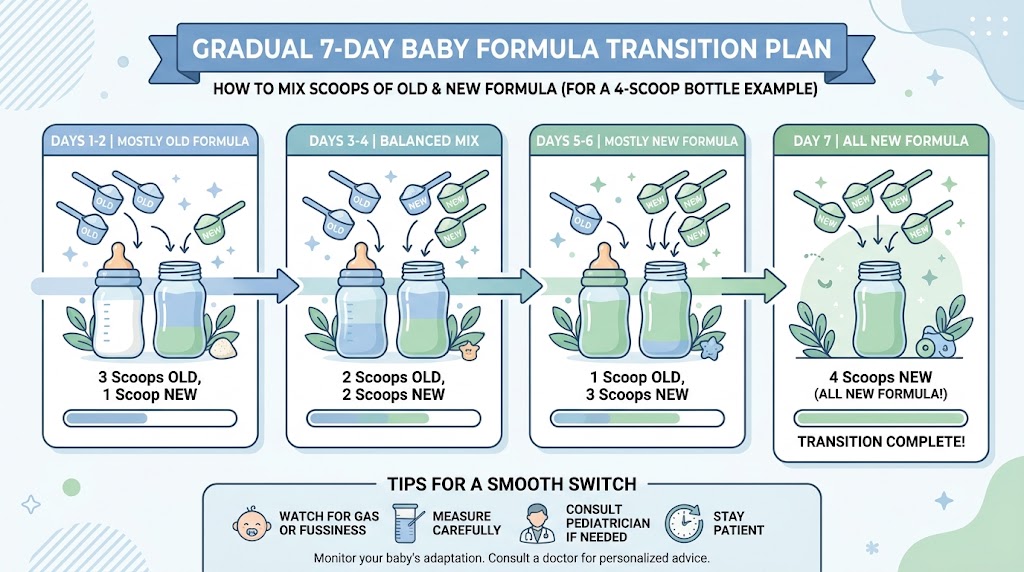
A gradual transition is often best. Slowly increase the proportion of the new formula over several days, such as replacing one scoop or one ounce at a time daily. Monitor your baby for changes in gas, fussiness, and stool consistency.
When Should I Consult a Pediatrician or Look for Medical Red Flags?
See a pediatrician whenever symptoms go beyond normal developmental fussiness. A pediatrician can perform a clinical assessment for suspected milk protein allergy and review your symptom diary. They can also determine whether specialized care or a pediatric gastroenterology consultation is necessary.
Many digestive quirks resolve on their own, but certain red flags need immediate medical attention:
- Emergency Signs: Breathing difficulties, wheezing, a swollen throat or tongue, faintness, or floppiness can signal anaphylaxis. Seek emergency medical care immediately (call 999 in the UK or local emergency services).
- Urgent Medical Indicators: Blood or mucus in the stool, bile-stained green or yellow-green vomit, persistent projectile vomiting, or a fever in an infant under three months old.
- Growth and Feeding Concerns: Faltering growth, severe feeding distress, abdominal distension, or persistent refusal to feed.
Depending on the diagnosis, a physician might recommend short-term reflux medications (like famotidine), gas drops containing simethicone, or prescription hypoallergenic formulas.
How Long Does It Take to See Results After Switching?
Give a new formula time, because a baby’s digestive system needs time to adapt. Patience is essential when trying a new sensitive tummy formula, and parents naturally hope for overnight miracles.
For suspected cow’s milk protein allergy, clinical guidelines often recommend a fair trial of at least two to four weeks on a suitable specialized formula, without switching products. During this period, track short-term changes in gas pain, crying duration, stool frequency, reflux, and overall feeding comfort. Steady weight gain and a content mood between feeds are the clearest signs that the new formula for babies with sensitive stomachs is working.
How Do Cost, Availability, and Practical Factors Play Into My Choice?
Practical factors matter just as much as ingredient lists. Specialty formulas, organic options, and imported European brands often come with higher prices and varying availability.
When budgeting for a formula for gassy infant care, consider whether you need a powder or ready-to-feed format, and check for subscription plans or trial offers. Ask your pediatrician whether insurance coverage applies to prescribed hypoallergenic formulas. Choosing a product that balances digestive comfort with accessibility and affordability makes feeding sustainable over the long term.
How Do I Make the Final Decision for My Baby’s Comfort and Growth?
No single product works for every baby, so the best choice comes from patience, observation, and your pediatrician’s input. Choosing the right baby formula for colic or sensitivity can feel like a guessing game. Balancing digestive comfort with complete nutritional needs takes close partnership with your pediatrician. By tracking symptoms, avoiding unnecessary product switching, and prioritizing steady growth and contentment, you can find the right approach to help your little one thrive.
Quick Summary
- Fussiness, colic, and gas are extremely common in newborns and are usually not caused by standard cow’s milk formula.
- Always consult your pediatrician before switching to a gentle formula for newborns or other specialized alternative.
- True milk protein allergies or sensitivities present with distinct signs, such as blood in stool, severe reflux, eczema, or poor weight gain.
- Give any new formula a fair trial of two to four weeks when clinically indicated, and transition gradually rather than switching products frequently.
- Never dilute formula with extra water or make homemade substitutes, and watch for critical red flags that require immediate medical evaluation.