
The formula that’s closest to breastmilk in both nutrition and taste uses 100% lactose, an adjusted 60:40 whey-to-casein ratio, and whole milk fat or high-quality plant oils. No formula can be an identical copy of breast milk, and that’s okay. Your goal is a safe, nutritionally complete formula that suits your baby’s digestion and palate. This guide explains what to look for, how top brands compare, and how to help your baby accept a bottle.
What does “closest to breast milk” actually mean?
No infant formula can fully replicate human breast milk. Breast milk is a dynamic, living fluid. Its composition changes over a single feed, throughout the day, and across the months of your baby’s development.
It contains living immune cells, active enzymes, antibodies, growth factors, and a complex matrix of human milk oligosaccharides (HMOs) that adjust to your baby’s needs.
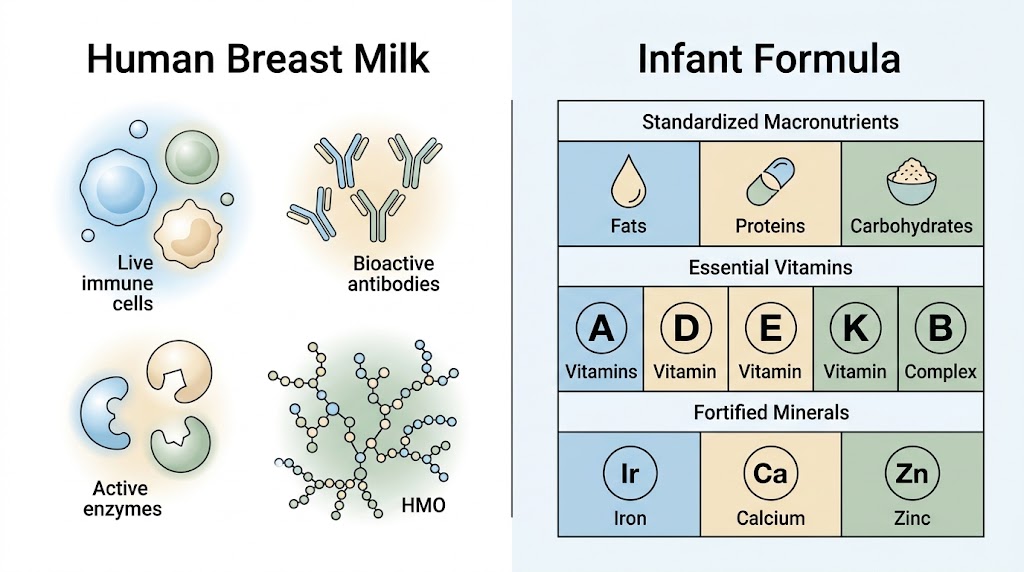
When brands say “closest to breast milk,” “similar to breast milk,” or “like breast milk,” they mean nutritional composition, not biological identity. An infant formula similar to breast milk is regulated to provide complete nutrition that supports healthy growth when breast milk is unavailable or supplemented.
Formula can match the caloric density, basic macronutrient balance, and essential vitamin profiles of human milk. But nutritional similarity does not equal taste or biological similarity. Formula provides complete, reliable nutrition, yet its flavor, aroma, and exact bioactive profile will always differ from human milk.
What formula tastes the most like breast milk?
A standard 100% lactose-based formula tastes closest to breast milk. If you’re asking which formula tastes most like breast milk, a lactose-based cow’s milk or goat’s milk formula with an adjusted whey-to-casein ratio generally gives the mildest, sweetest, and most palatable flavor. That makes it the best answer to “what is the closest formula to breast milk taste.”
Breast milk is naturally sweet, mild, thin, and smooth. Its sweetness comes from its high concentration of lactose, the natural sugar in mammalian milk. It lacks the metallic, bitter, or overly processed notes sometimes found in synthetic nutrient mixtures.
A formula that tastes like breast milk depends on its ingredients. Taste, smell, and palatability vary widely:
- Carbohydrate source: Formulas using 100% lactose taste closest to breast milk’s natural sweetness. Those using corn syrup solids, maltodextrin, or sucrose can taste excessively sweet or distinctly different from human milk.
- Protein type: Standard intact cow’s milk protein has a mild, milky taste. Partially or extensively hydrolyzed proteins (found in gentle or hypoallergenic formulas) are broken into smaller peptides, which creates a distinctly bitter or sour flavor and a sharp aroma.
- Fat blends: Formulas with whole milk fat or creamy vegetable oil blends (like coconut or sunflower oil) have a smoother, creamier mouthfeel. Marine-derived omega-3 (fish oil) can leave a slight fishy aftertaste.
- Iron fortification: Essential iron can leave a subtle metallic aftertaste, particularly in liquid concentrate formats.
How do protein sources compare between breast milk and formula?
The protein in raw cow’s milk is structured very differently from human milk protein. Protein provides the essential amino acids needed for muscle growth, tissue repair, and brain development, so formula makers adjust it to be closer to human milk.
Whey vs. casein ratios
Milk protein has two main types: whey (liquid, fast-digesting) and casein (curd-forming, slower-digesting).
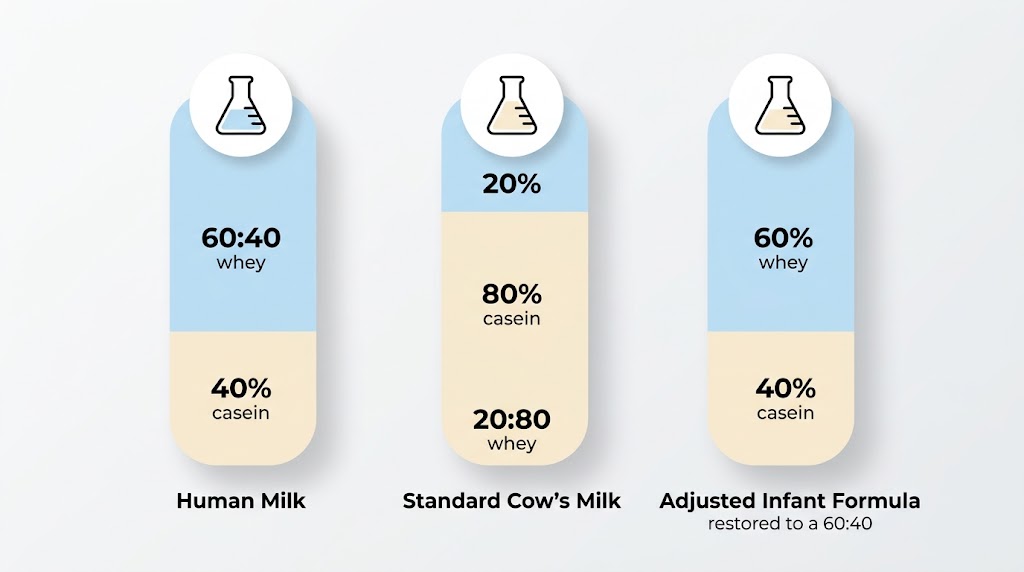
- Breast milk: Mature breast milk has an approximate 60:40 whey-to-casein ratio (up to 80:20 in early lactation). This high-whey balance forms soft, loose curds in the stomach, making it gentle and quickly digested.
- Standard cow’s milk: Unadjusted cow’s milk has a 20:80 whey-to-casein ratio. The high casein content forms firmer curds in an infant’s stomach, which can cause digestive discomfort or slower gastric emptying in sensitive newborns.
To make a formula that’s closest to breastmilk, premium manufacturers add demineralized whey powder to reach the 60:40 target ratio. This improves digestibility and stomach comfort.
Hydrolyzed and specialty proteins
Babies with cow’s milk protein sensitivity, intolerance, or allergy need altered proteins. There are two main types:
- Partially hydrolyzed formulas: Intact proteins are broken into smaller segments. Often marketed as “gentle” or “sensitive,” these reduce digestive work but alter the taste slightly.
- Extensively hydrolyzed formulas: Proteins are broken into tiny peptides. These are medical, hypoallergenic formulas (e.g., Pepticate) designed for infants with documented cow’s milk protein allergy (CMPA). They have a distinct, pungent smell and a noticeably bitter taste.
Goat milk and A2 proteins
Goat milk formula forms a softer curd in the stomach. Brands such as Kendamil Goat, Kabrita, and Bubs Goat have lower levels of alpha-s1-casein and a high prevalence of A2 beta-casein protein. If you’re wondering what milk is closest to breastmilk for digestion, many babies find goat milk formula easier to digest.
Goat milk is NOT suitable for babies with a diagnosed cow’s milk protein allergy, because the proteins cross-react.
What fats are used in formula to mimic human milk fat?
Fat is the primary energy source in breast milk, accounting for nearly 50% of a baby’s daily caloric intake. Its structure is exceptionally complex, built around a unique triglyceride profile wrapped in a bioactive membrane called the Milk Fat Globule Membrane (MFGM).
Whole milk fat vs. vegetable oil blends
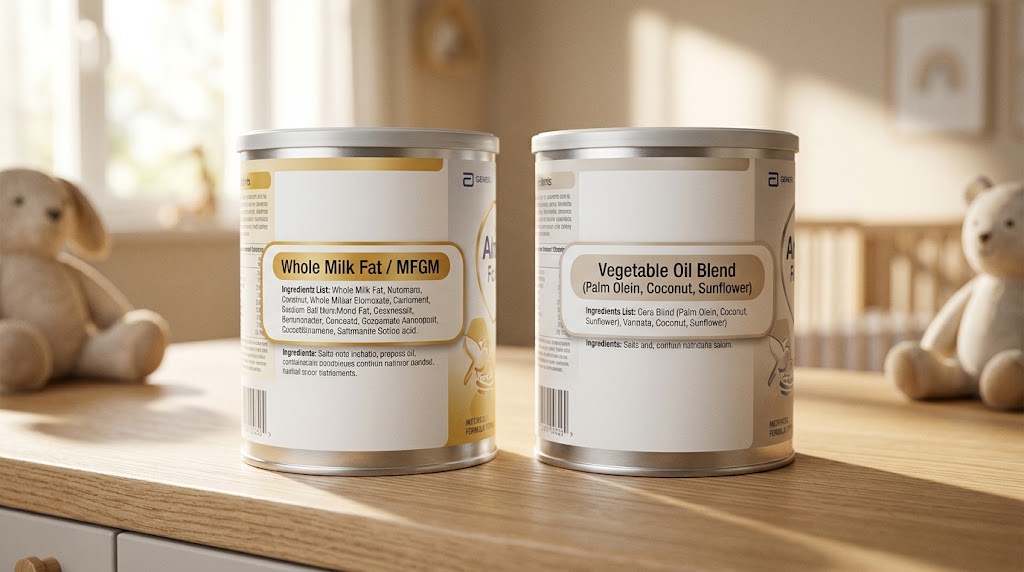
Traditional formulas replace milk fat with vegetable oils. Manufacturers strip out milk fat/butterfat and use a blend of palm, coconut, sunflower, safflower, and soy oils to match the essential fatty acid spectrum of human milk.
Modern premium formulas retain whole milk fat or added MFGM. Examples include Bobbie Organic Whole Milk, Kendamil Classic, and Kendamil Organic. Natural milk fat provides naturally occurring palmitic acid, preserves native MFGM, and gives the prepared bottle a rich, creamy texture and a pleasant, milky flavor. For parents searching for the milk closest to breast milk in fat content, these are the formulas to look at.
The palm oil dilemma
Palm oil is common in conventional formulas, but its palmitic acid is positioned differently from that in human milk. Many formulas use palm oil or palm olein oil to match the palmitic acid levels in breast milk. The difference is in where the palmitic acid sits on the glycerol backbone:
- In breast milk, palmitic acid is attached at the sn-2 position, allowing easy absorption.
- In palm oil, palmitic acid sits at the sn-1 and sn-3 positions. In the gut, it can bind with free calcium to form insoluble “calcium soaps.”
This binding can lead to harder stools, mild constipation, and reduced calcium absorption. For this reason, many parents prefer palm oil-free formulas that use coconut, high-oleic sunflower, or whole milk fat instead.
How do carbohydrates affect formula taste and digestive health?
Carbohydrates provide quick fuel for brain growth and metabolic functions, and the type used shapes both taste and digestion.
Lactose: the standard carbohydrate
Lactose is the dominant carbohydrate in human milk, providing roughly 40% of its total calories. It offers several benefits:
| Benefit | What it does |
|---|---|
| Natural sweetness | Matches breast milk flavor |
| Gut health | Functions as a prebiotic |
| Mineral absorption | Enhances calcium and sodium intake |
| Stool consistency | Keeps bowel movements soft |
Formulas using 100% lactose give a clean, natural flavor profile closest to breast milk taste.
Alternative carbohydrates
Low-lactose, “sensitive,” and hypoallergenic formulas often replace lactose with other sugars:
- Corn syrup solids or glucose syrup: Highly digestible but significantly sweeter than lactose, which can alter a baby’s flavor preferences.
- Corn maltodextrin: Easily absorbed and less sweet, but lacks the prebiotic properties of lactose.
- Brown rice syrup or sucrose: Rarely used in modern infant formulas due to concerns over arsenic traces or excessive sweetness, though historical or international formulas occasionally used them.
Unless your infant has a confirmed medical need for lactose restriction (such as congenital lactase deficiency, which is extremely rare), a lactose-based formula offers both nutritional alignment and an authentic, mild sweetness.
What other functional ingredients are added to infant formula?
Manufacturers fortify formula with functional compounds to narrow the gap between formula and breast milk. Here’s what you’ll see on the label:
- DHA and ARA (omega-3 and omega-6 fatty acids): Vital for brain and retinal development. DHA from marine algae or fish oil can sometimes give formula a slight metallic or fishy odor. Modern extraction techniques have minimized this, but subtle differences exist between brands.
- Iron: Fortification is critical to prevent iron-deficiency anemia in infants after 4 to 6 months of age. While essential, iron can introduce a subtle metallic aftertaste.
- Prebiotics (GOS, FOS, PDX, and HMOs): HMOs like 2′-FL are complex carbohydrates, naturally abundant in breast milk, that nourish beneficial gut bacteria. Modern formulas add galactooligosaccharides (GOS), fructooligosaccharides (FOS), polydextrose (PDX), or synthetically derived HMOs to support gut immunity and stool softness.
- Organic and non-GMO standards: Brands emphasizing organic ingredients (certified USDA Organic or EU Organic) avoid synthetic pesticides, growth hormones, and artificial processing additives, appealing to parents who want clean ingredient panels.
Why does formula taste, smell, and feel different from breast milk?
Formula differs from breast milk in sweetness, flavor, aroma, and texture, and the difference is largest in hypoallergenic formulas. If you sample your baby’s formula, you may be surprised by its taste or smell. Here is how the three compare:
| Attribute | Human breast milk | Standard cow’s milk formula | Hypoallergenic / hydrolyzed formula |
|---|---|---|---|
| Sweetness | Mildly sweet (lactose) | Mildly sweet to sweet | Less sweet; bitter undertones |
| Flavor profile | Clean, creamy, subtle | Milky, slightly metallic | Sharp, bitter, sour, or yeast-like |
| Aroma | Fresh, sweet, neutral | Neutral to slightly metallic | Pungent, sharp |
| Texture / mouthfeel | Thin to moderately creamy | Smooth, light to rich | Very thin, watery |
Temperature and water quality
Serving temperature and mixing water both change how formula tastes.
- Serving temperature: Freshly expressed breast milk is around body temperature (37°C / 98.6°F). Formula served cold from the refrigerator may taste flat or be rejected by a baby used to warm breast milk.
- Tap water and fluoride: The water used to mix powdered formula heavily influences taste. Tap water high in minerals, chlorine, or iron can create off-flavors. Filtered or non-mineralized bottled water gives a consistent, clean taste. Avoid high-mineral or natural spring water, as high mineral loads can strain an infant’s kidneys.
How do top formula brands compare?
Several popular formulas come close to breast milk on ingredients. If you’re asking which baby formula is most like breast milk, this ingredient-based comparison of popular US and UK options is a good starting point. It also answers “what formula is closest to breastmilk uk” and “what formula is most like breast milk” for parents shopping on either side of the Atlantic.
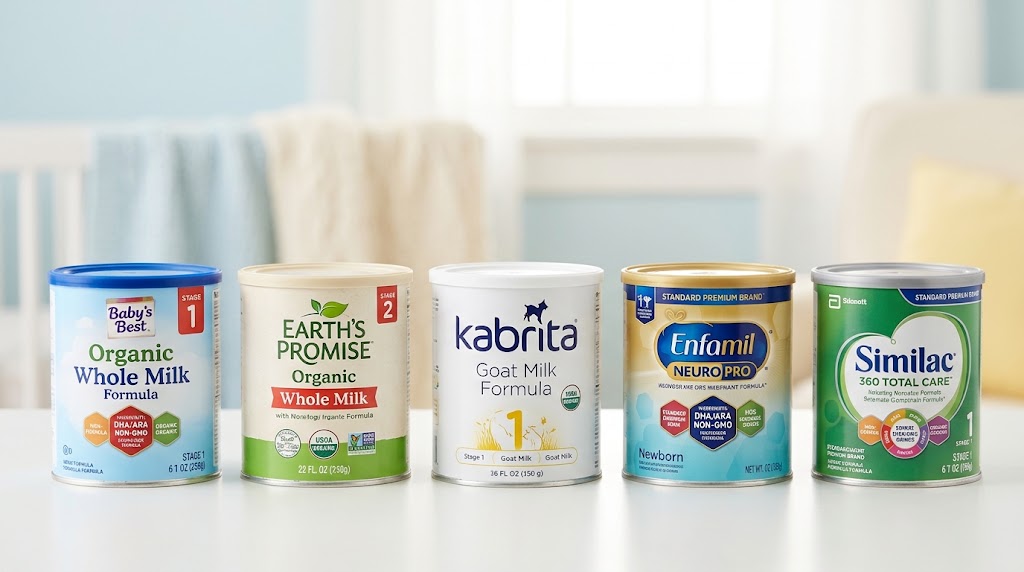
Standard and whole milk formulas
- Bobbie Organic Whole Milk Infant Formula: Uses organic whole cow’s milk as a primary fat source, offering a rich taste and natural milk fat profile without palm oil or corn syrup.
- Bobbie Organic Original Infant Formula: A standard grass-fed cow’s milk formula with a 60:40 whey-to-casein ratio, organic lactose, and clean, simple ingredients.
- Kendamil Classic and Organic Infant Formula: Highly praised for taste, and a leading UK pick for parents asking what formula is closest to breastmilk taste. Made in the UK with whole cow’s milk fat, 100% lactose, a 60:40 whey-to-casein ratio, plant-based DHA (no fish oil taste), and zero palm oil.
- Similac 360 Total Care: A widely available standard US formula with a blend of 5 HMOs, no palm olein oil, and a lactose base, designed to support immune and gut health.
- Enfamil Infant / NeuroPro: Features a double-prebiotic blend (GOS and PDX), added MFGM, and DHA levels aligned with global standards, though it uses a palm olein oil blend.
- Kirkland Signature ProCare: A cost-effective store-brand formula using standard cow’s milk protein, lactose, and dual prebiotics, offering complete nutrition at an affordable price.
Goat milk formulas
- Kendamil Goat Infant Formula and Kabrita Goat Milk Formula: Use whole goat milk and A2 goat protein, forming softer curds in the stomach. Naturally sweet and smooth, they are popular for babies with mild digestive sensitivity to cow’s milk. Parents wondering about a formula milk similar to breastmilk in digestibility often start here.
- Bubs Goat Milk Formula: An Australian option with goat whey, lactose, and balanced fatty acids, ideal for easy digestion.
Gentle and hypoallergenic formulas
- Bobbie Organic Gentle Formula: Uses 100% hydrolyzed whey protein and a reduced lactose level to help ease mild gas or fussiness while keeping clean organic standards.
- Pepticate Hypoallergenic Formula: An extensively hydrolyzed formula for infants with mild-to-moderate CMPA, with whey-based peptides and lactose to improve flavor relative to other hypoallergenic brands.
What is combination feeding, and how do you transition smoothly?
Combination feeding (combo feeding) means giving your baby both breast milk and infant formula. Whether you’re supplementing for low milk supply, preparing to return to work, or sharing night feeds with a partner, it gives you flexibility while your baby still gets the benefits of breast milk. For more on feeding, browse our other guides here.
Maintaining your milk supply
Milk production runs on supply and demand. To protect your supply while supplementing:
- Pump or express milk whenever your baby has a formula bottle during the early weeks of establishing supply.
- Offer nursing sessions first, before a formula top-up bottle.
- Keep a consistent daily schedule for nursing and pumping.
Introducing formula step by step
A gradual transition helps your baby’s palate and digestive system adjust if they’re reluctant to accept the change in taste or texture:
| Step | Days | Expressed milk | Formula |
|---|---|---|---|
| 1 | Days 1–3 | 75% | 25% |
| 2 | Days 4–6 | 50% | 50% |
| 3 | Days 7–9 | 25% | 75% |
| 4 | Day 10+ | 0% | 100% |
Crucial preparation rule: Always prepare powdered formula separately with safe water, following the manufacturer’s instructions, before mixing it with expressed breast milk. Never add dry formula powder directly into liquid breast milk, as this alters the fluid balance and can endanger your baby’s kidney health.
How can you help a baby accept formula?
Bottle refusal or taste rejection is common when a breastfed baby meets formula, and a few simple strategies usually help.
- Serve it warm: Warm the formula safely to body temperature (37°C). Warmth releases sweet aromatics and closely mirrors fresh breast milk.
- Time it right: Offer the bottle when your baby is calm and slightly hungry, not when they are ravenous or exhausted.
- Switch caregivers: Babies can smell breast milk on their birth mothers. Have a partner, grandparent, or caregiver offer the bottle while the mother is out of the room.
- Optimize the bottle and nipple: Use a slow-flow, breast-shaped nipple that encourages an active latch. Slow flow prevents gasping and choking.
- Choose patience over force: Never force a baby to finish a bottle or force a nipple into their mouth. Let them explore the flavor gradually.
- Avoid unapproved additives: Never add sugar, honey, juice, cereal, or flavoring drops to formula. Honey poses a risk of infant botulism, and added sugars strain an infant’s metabolic system.

How to prepare and serve formula safely
Safe preparation protects your baby from harmful bacteria and preserves nutrient integrity.
Preparation checklist
- Wash hands and equipment: Wash hands thoroughly and sterilize bottles before first use.
- Use safe water: Use clean, safe drinking water. If your local health authority or pediatrician recommends it (especially for newborns under 2 months, premature infants, or immunocompromised babies), boil tap water for 1 minute and let it cool to no less than 70°C (158°F) before mixing powdered formula, to kill potential pathogen spores.
- Measure exact ratios: Measure water into the bottle first, then add level scoops of powder using the provided scoop. Never pack the powder down.
- Warm safely: Place the prepared bottle in a bowl of warm water or use a bottle warmer. Never use a microwave, as it creates hot spots that can burn your baby’s mouth. Test the temperature on the inside of your wrist before serving.infant botulism
Storage and shelf life
- Prepared formula: Use within 2 hours at room temperature, or store in the refrigerator (4°C / 40°F or below) for up to 24 hours.
- In-use bottles: Once your baby’s mouth touches the nipple, feed within 1 hour. Discard any remaining formula after 1 hour, because bacteria from the baby’s saliva multiply rapidly in the milk.
- Powder storage: Store opened cans in a cool, dry place with the lid tightly closed. Use within 1 month of opening, and do not store powder in the refrigerator.
How to tell taste rejection from formula intolerance
A baby who dislikes a new flavor looks different from a baby with an intolerance or allergy, and it’s worth knowing the signs.
Signs of taste dislike or adjustment
- Pushing the bottle away with their tongue
- Gagging slightly on the first sip or turning their head away
- Taking a few sips, pausing, and looking confused
- Fussing during feeds without other physical symptoms
Signs of digestive intolerance or allergy
If you notice physical symptoms, consult your pediatrician promptly:
- Digestive issues: Frequent projectile vomiting, persistent watery diarrhea, severe constipation (hard, pebble-like stools), or blood or mucus in the stool.
- Skin symptoms: Sudden hives, raised red rashes, or flaring eczema.
- Respiratory symptoms: Wheezing, coughing, or facial, lip, or tongue swelling. Swelling or breathing difficulty is a medical emergency; seek urgent emergency care immediately.
- Systemic signs: Persistent, inconsolable crying (colic-like distress), poor weight gain, or symptoms of Food Protein-Induced Enterocolitis Syndrome (FPIES), which causes severe, repetitive vomiting and dehydration hours after feeding.
Quick summary
You don’t need an “identical copy” of breast milk. You need a safe, complete formula that fits your baby’s digestion and palate.
- Nutritional reality: No formula matches the dynamic, living immunoglobulins of breast milk, but modern formulas match its core macronutrient balance effectively.
- Best for taste similarity: Formulas with 100% lactose, an adjusted 60:40 whey-to-casein ratio, and whole milk fat or high-quality plant oils closely mirror the mild sweetness and smooth mouthfeel of human milk.
- Digestive fit: Avoid palm oil if your baby struggles with hard stools. For mild digestive sensitivity, goat milk or A2 formulas offer soft stomach curds, while CMPA requires specialized, extensively hydrolyzed formulas prescribed by a doctor.
- Smooth transitions: Introduce formula gradually by blending prepared formula with expressed breast milk (75:25 → 50:50 → 25:75), warming bottles to body temperature, and having another caregiver offer the bottle.
- Safety first: Always follow the exact mixing instructions on the label, never dilute or over-concentrate powder, and discard leftover bottle milk within one hour of feeding.