

Yes, you should wake a newborn to feed in the first few weeks. If your baby hasn’t woken on their own within the maximum interval (2 to 3 hours by day for breastfed babies, up to 4 hours at night), gently wake them. Once your baby has regained birth weight and your pediatrician confirms steady weight gain (usually around 2 to 4 weeks), you can stop setting night alarms and move to responsive feeding on demand.
It can feel wrong to disturb a peacefully sleeping baby, especially when you are exhausted yourself. Below you’ll find when to wake your newborn, how to do it gently, and when you can finally let them sleep. For more on early feeding, browse our feeding and nutrition articles here.
Should I Be Waking My Newborn Up to Feed?
Yes. During the first few weeks, you do have to wake up a newborn to feed if they don’t wake on their own within a specific timeframe. So if you’ve been wondering, “do I need to wake up my newborn to feed?”, the answer for the early weeks is yes.

Newborns have tiny stomachs, roughly the size of a marble in the first days, and they digest milk rapidly, so they need frequent feeding. They also spend a lot of time in deep REM sleep and don’t always wake automatically when their bodies need energy.
Healthcare professionals recommend waking a newborn to feed for five main reasons:
- Weight recovery: Most healthy newborns lose up to 7% to 10% of their birth weight in the first few days. Frequent feeding provides the calories needed to regain it.
- Establishing milk supply: For breastfeeding parents, nursing 8 to 12 times in 24 hours stimulates prolactin and oxytocin levels, helping establish a robust breast milk supply.
- Preventing jaundice: Bilirubin is excreted through bowel movements. Adequate milk intake means frequent wet and dirty diapers, which helps clear excess bilirubin.
- Preventing hypoglycemia: Newborns have small glycogen stores. Long stretches without food can lead to drops in blood sugar, making them even sleepier and harder to wake.
- Relieving breast engorgement: Frequent nursing prevents milk stasis, reducing fullness, discomfort, and the risk of clogged ducts or mastitis.
How Often Should a Newborn Eat, and How Long Can They Go Without Food?
Measure feedings from the start of one feeding to the start of the next, not from the time your baby finishes.
| Feeding Type | Average Frequency (24 Hours) | Daytime Maximum Interval | Nighttime Maximum Interval |
|---|---|---|---|
| Breastfed newborns | 8 to 12 times (or more) | 2 to 3 hours | 4 hours |
| Formula-fed newborns | 8 times | 3 hours | 4 to 5 hours |
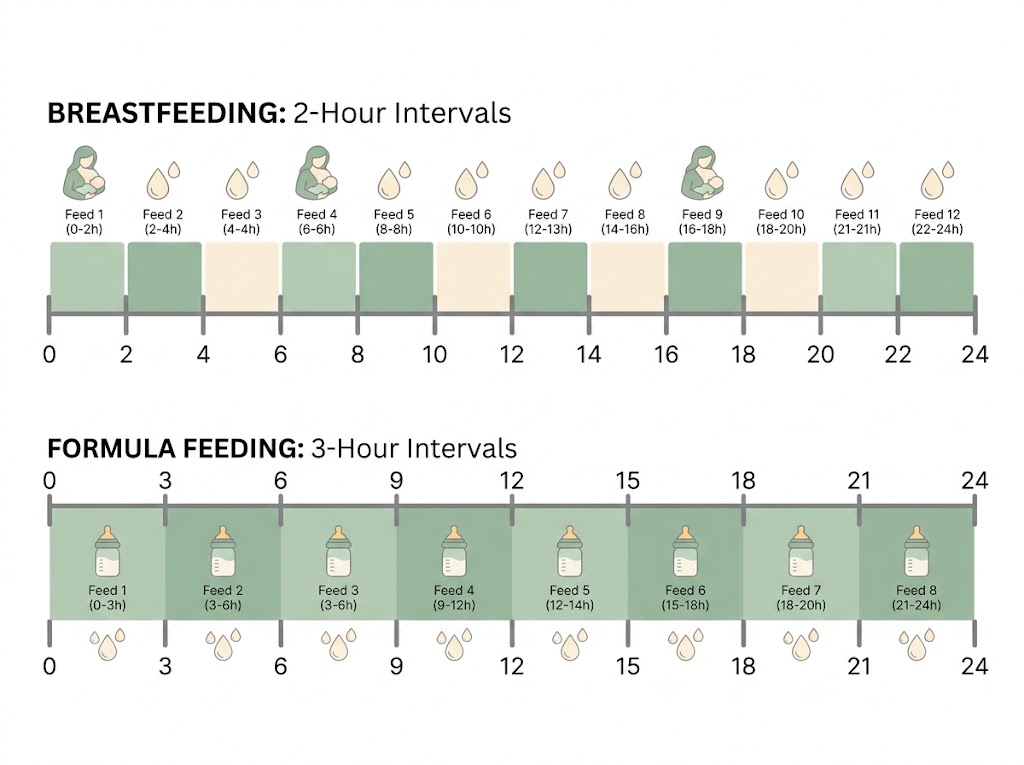
Breastfed infants digest human milk quickly and usually need to feed every 2 to 3 hours. Formula takes slightly longer to break down, so formula-fed newborns can typically stretch to 3 to 4 hours.
If your newborn doesn’t want to eat every 3 hours, the same limits apply. A 2-week-old should not go longer than 4 hours without a feed. If you’re wondering how long a 7-week-old can go without eating, an older infant with confirmed, strong weight gain may safely sleep longer stretches.
How Can I Tell My Baby Is Hungry Before They Start Crying?
Crying is a late hunger cue, so feed at the earliest signs of hunger. Many parents wait for crying before offering a breast or bottle, but waking and feeding your baby at the first cues makes for a much calmer feeding session.
- Early cues: stirring or shifting in sleep, rooting (turning the head), lip-smacking or licking
- Mid cues: stretching or squirming, hands to mouth or sucking, soft whimpering
- Late cues: crying out loud, turning deep red, being hard to soothe
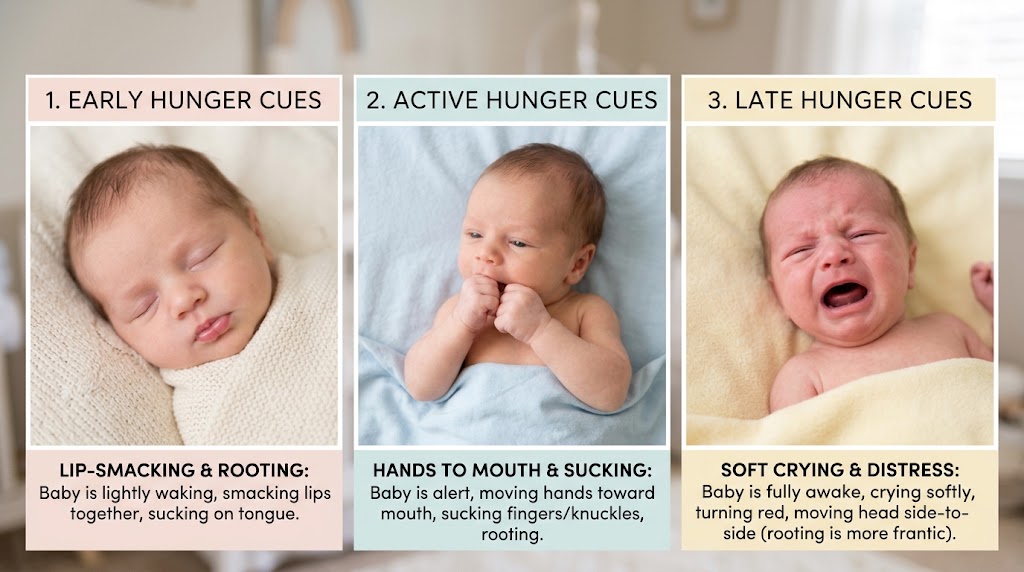
The best time to start a feed is when your baby is in a lighter sleep cycle. If you see your baby moving their eyelids, smacking their lips, or turning their head into the mattress while still dazed, that’s your window.
How Do I Gently Wake a Sleepy Baby to Eat?
Gentle stimulation is what lifts a baby out of deep sleep into quiet alertness. Simply picking up a deeply sleeping baby won’t always work, so here is how to wake up a baby to feed.
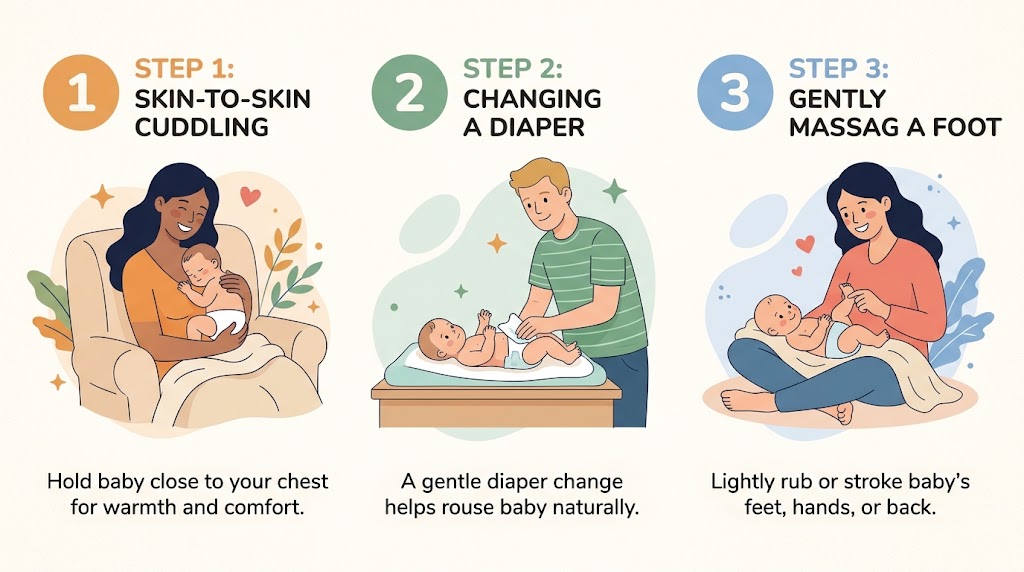
Try this step-by-step routine:
- Dim the overhead lights. Bright lights make newborns squeeze their eyes shut. A dimmer room encourages them to open their eyes and engage.
- Unswaddle and undress. Warmth induces sleepiness. Remove the swaddle and leave your baby in just a diaper and undershirt.
- Change their diaper. A cool wipe and gentle movement are almost always effective at rousing a sleepy infant.
- Try skin-to-skin contact. Place your baby directly on your bare chest. It regulates their body temperature and heart rate while naturally awakening their feeding instincts.
- Use tactile stimulation. Gently stroke their palm, rub the soles of their feet, or walk your fingers up their spine.
- Express a drop of milk. If you’re breastfeeding, express a tiny drop of colostrum or breast milk onto your nipple and touch it to the baby’s lips so they can taste and smell it.
Common mistake to avoid: Skip harsh rousing techniques like flicking feet, applying cold washcloths, or shaking the baby. Gentle, incremental stimulation works best and keeps your baby calm.
What If My Newborn Won’t Wake Up or Keeps Falling Asleep While Feeding?
Falling asleep mid-feed is common, and there are simple ways to keep your baby awake. If you’ve thought, “my newborn won’t wake up to feed!” or “my 2-week-old keeps falling asleep while feeding!”, you’re not alone. Feeding takes a lot of energy, and the warmth of nursing or a warm bottle easily lulls a newborn back to sleep.

To keep your baby awake during breastfeeding or bottle-feeding, whether your newborn won’t stay awake to feed or keeps drifting off:
- Switch sides frequently. When active swallowing slows to passive flutter-sucking, burp your baby and switch to the other breast, or pause the bottle.
- Use breast compressions. If you’re nursing, gently squeeze your breast while the baby is latched. This increases milk flow, and a sudden rush of milk triggers swallowing and keeps the baby active.
- Stimulate the Babkin reflex. Gently press the palm of your baby’s hand while they nurse. This neurological reflex encourages the jaw to open and continue sucking.
- Adjust the feeding position. Switch from a laid-back position to a more upright hold, like the football hold or cradle position.
- Tell active sucking from comfort sucking. Active feeding has rhythmic jaw movements, visible swallows, and a wide gape. Comfort sucking is shallow, quick fluttering without audible swallows. If your baby shifts to comfort sucking, pause to re-stimulate them.
If your baby dazes off and refuses to latch after 15 to 20 minutes of trying, place them down safely, wait 20 to 30 minutes until they shift into a lighter sleep phase, and try the feed again.
When Can I Stop Waking My Newborn to Feed?
You can generally stop waking your baby, including a 1-month-old, or stop setting nighttime alarms once specific growth and health benchmarks are met. If you’re asking when to stop waking a newborn to feed, or whether to wake a 2-month-old, these benchmarks are what to look for.
You can let your baby sleep longer stretches at night when:
- Birth weight is regained. Your baby has surpassed their original birth weight (typically within 10 to 14 days after birth).
- Weight gain is consistent. Your pediatrician confirms your baby is gaining weight at a healthy, consistent trajectory along their growth curve.
- Diaper output is sufficient. Your baby is producing plenty of wet and dirty diapers daily.
- Your healthcare provider approves. Always consult your pediatrician before dropping scheduled nighttime feeds.

Once your doctor clears you, you can move to responsive feeding (feeding on demand). That means your baby can sleep as long as they want at night, provided they keep feeding frequently during the daytime. So, should you wake a newborn to feed at night? Until you have that clearance, yes. After it, you generally don’t need to.
How Do I Know My Newborn Is Getting Enough Milk?
Tracking diaper output and weight is the best way to check milk intake at home. When you stop managing feeds by the clock, it’s natural to worry about whether your baby is getting enough calories.
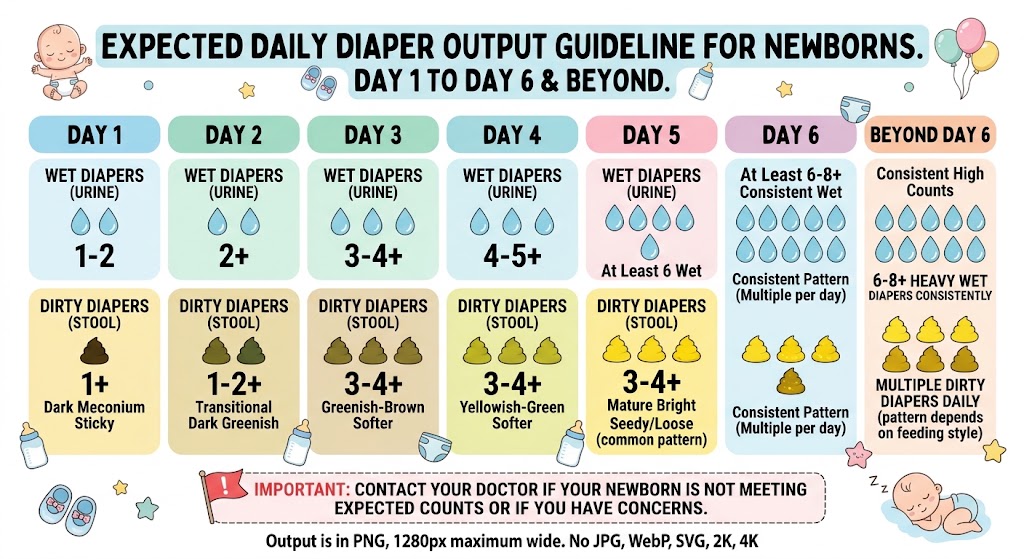
Diaper tracking guidelines:
- Days 1–2: 1 to 2 wet diapers and 1 to 2 dark, tarry stools (meconium) per day.
- Days 3–4: 3 to 4 wet diapers and 3 to 4 transition stools (greenish-yellow) per day.
- Days 5+: At least 5 to 6 heavy, wet diapers and 3 to 4 seedy, mustard-yellow stools per day.
Other positive signs:
- Your baby softens their hands and opens their fists after a feed.
- Your breasts feel noticeably softer and lighter after nursing.
- Your baby has periods of quiet alertness between naps.
- Your baby shows consistent, documented weight gain at checkups.
When Should I Call the Doctor About a Sleepy Newborn?
Sleepiness is normal for newborns, but excessive lethargy can signal an underlying medical issue that needs prompt attention.

Contact your pediatrician, midwife, or health visitor immediately if you notice:
- Inability to wake: Your baby can’t be awakened after 30 to 45 minutes of persistent, gentle attempts.
- Jaundice symptoms: Yellowing of the skin or the whites of the eyes along with extreme sleepiness (jaundice can make babies abnormally drowsy).
- Dehydration: Fewer than 5 wet diapers a day after the fifth day of life, a sunken fontanelle (soft spot), or dark, concentrated urine.
- Weak suck: Your baby latches but lacks the muscle strength to suck continuously or swallow.
- Fever or temperature instability: A rectal temperature above 100.4°F (38°C) or below 97.5°F (36.4°C).
- Delivery factors: Babies recovering from a complicated birth, vacuum delivery, or medications given during labor may have prolonged drowsiness and need direct medical supervision of their feeding schedules.
Quick Summary
- Do you have to wake a newborn to feed? Yes. Until your baby regains birth weight and shows steady weight gain, wake them every 2 to 3 hours during the day and at least every 4 hours at night.
- Watch early cues: Look for stirring, rooting, and hand-to-mouth movements rather than waiting for crying.
- Wake gently: Strip the baby to their diaper, change their nappy, use skin-to-skin contact, or express milk onto their lips.
- Keep them feeding: Switch breasts, use breast compressions, or try the Babkin reflex if your baby falls asleep at the breast or bottle.
- When to stop waking: Once your pediatrician confirms healthy weight gain (usually around 2 to 4 weeks), you can stop setting night alarms and move to responsive feeding on demand.